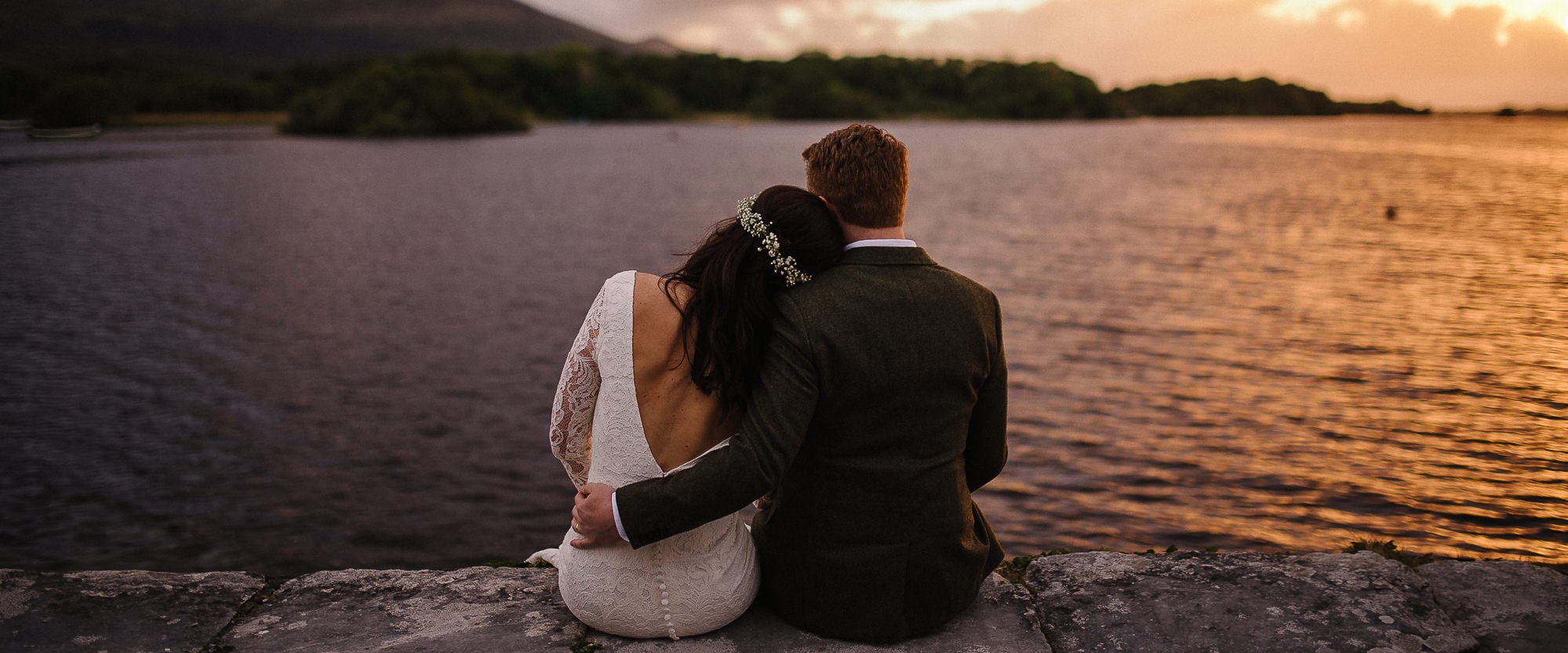
Winter Elopement: How to Stay Warm in Cold & Windy Locations
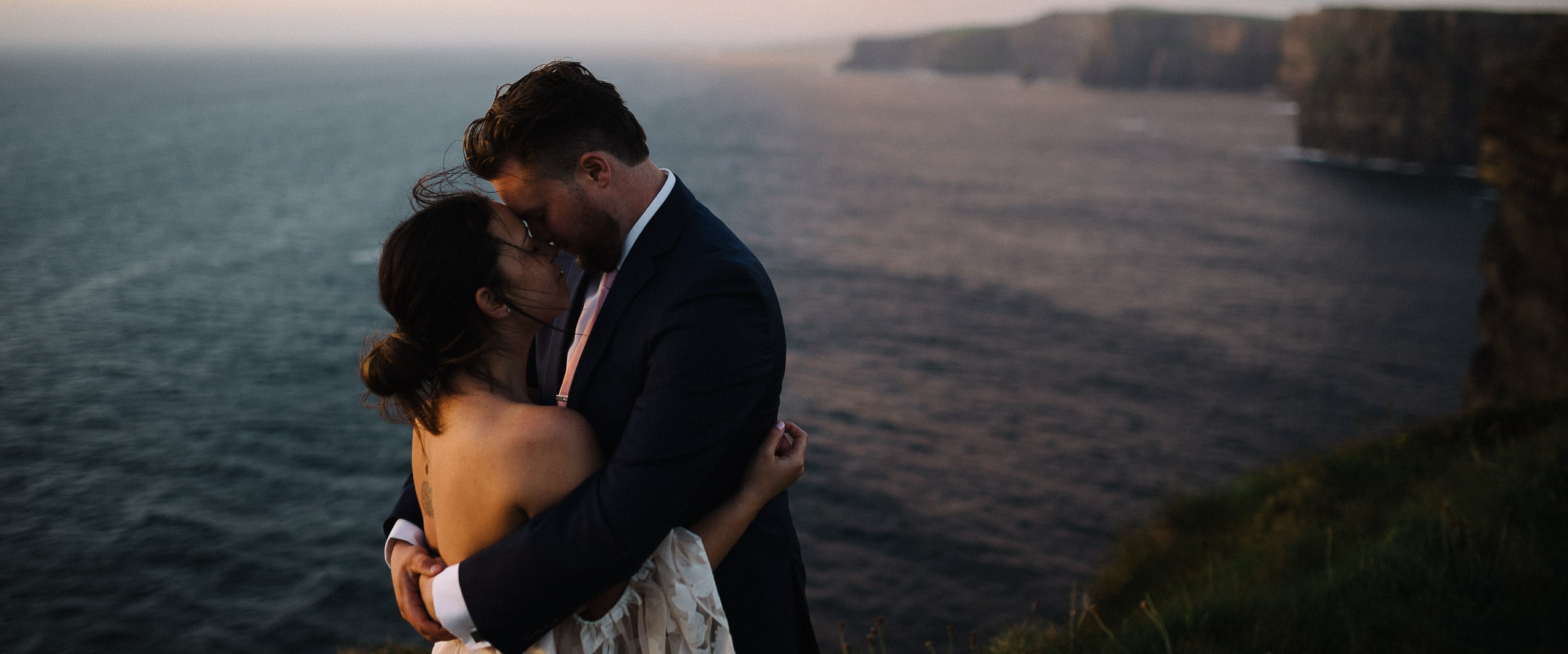
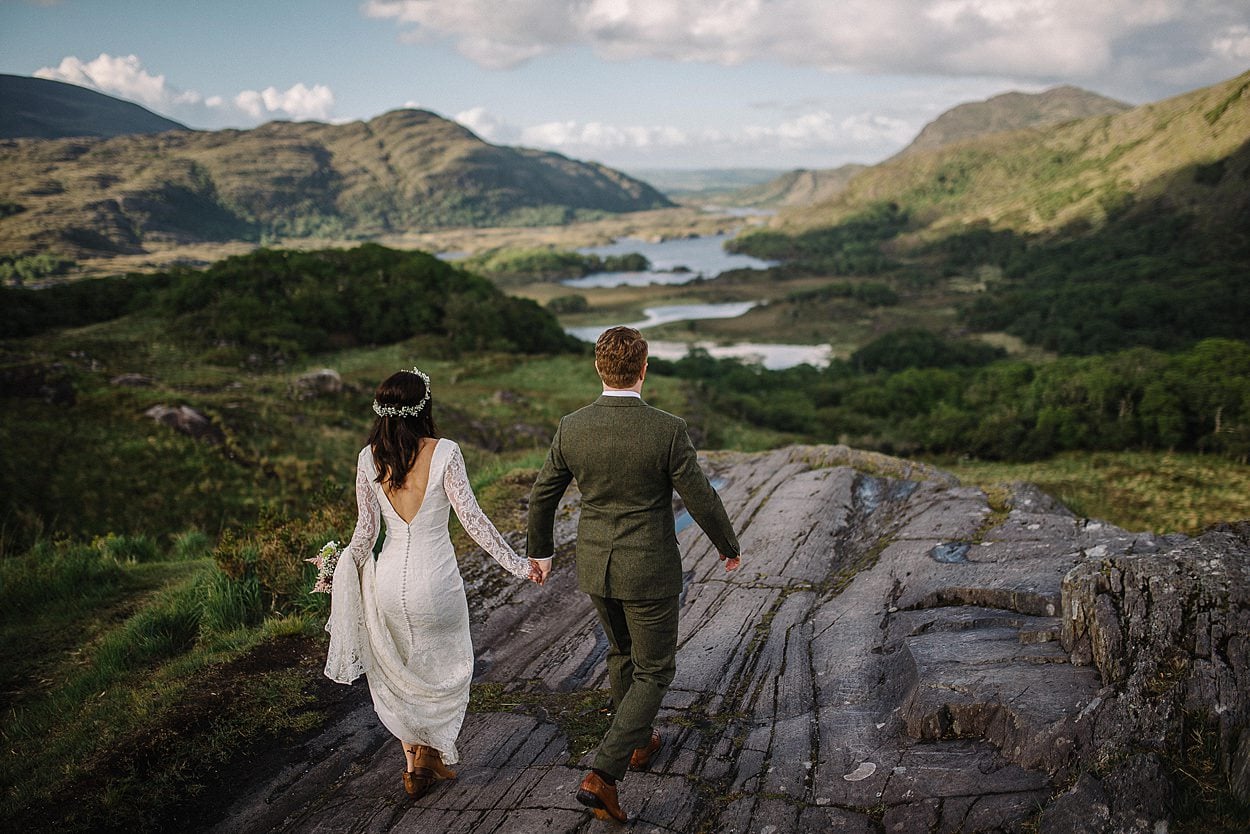
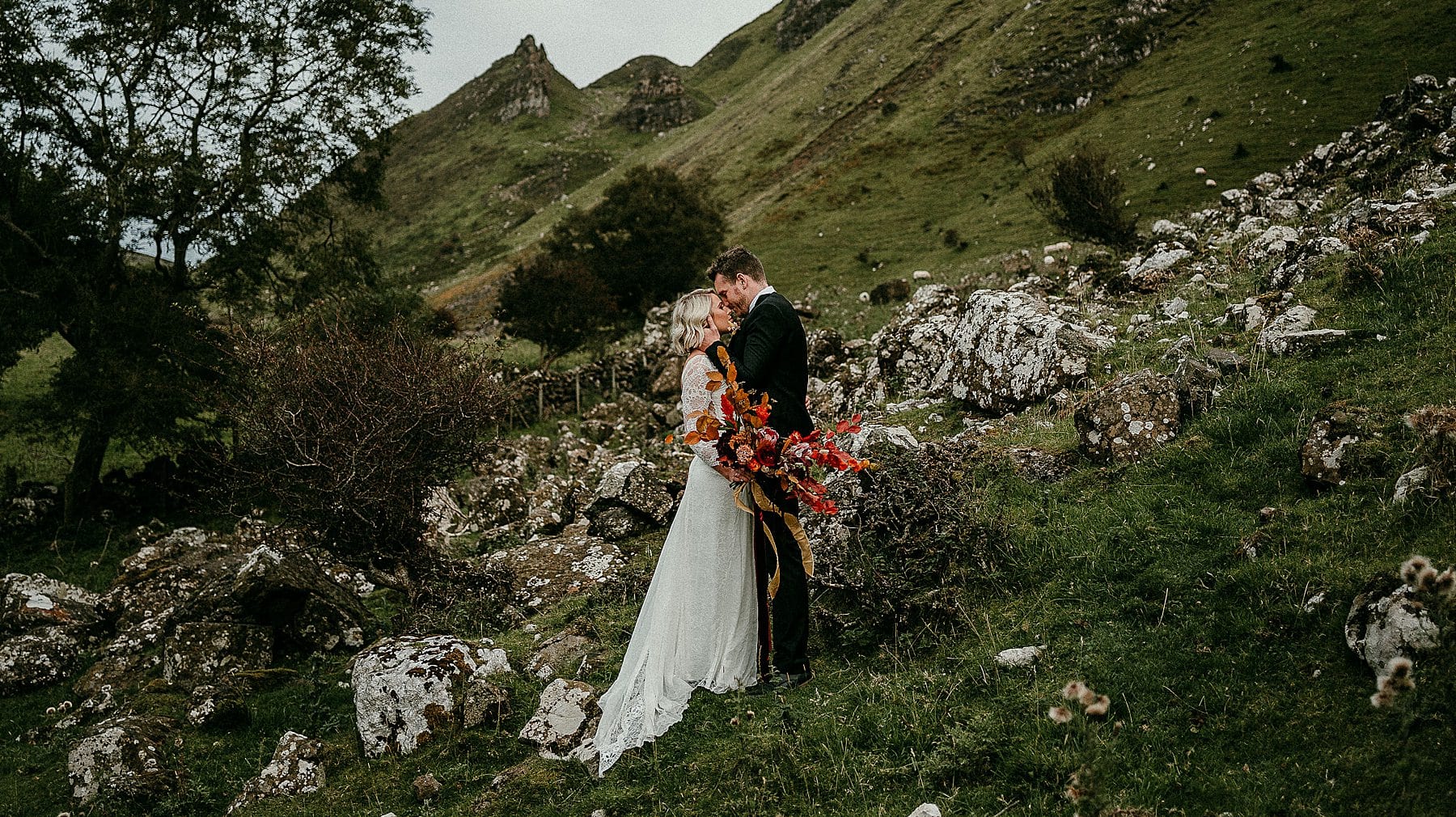
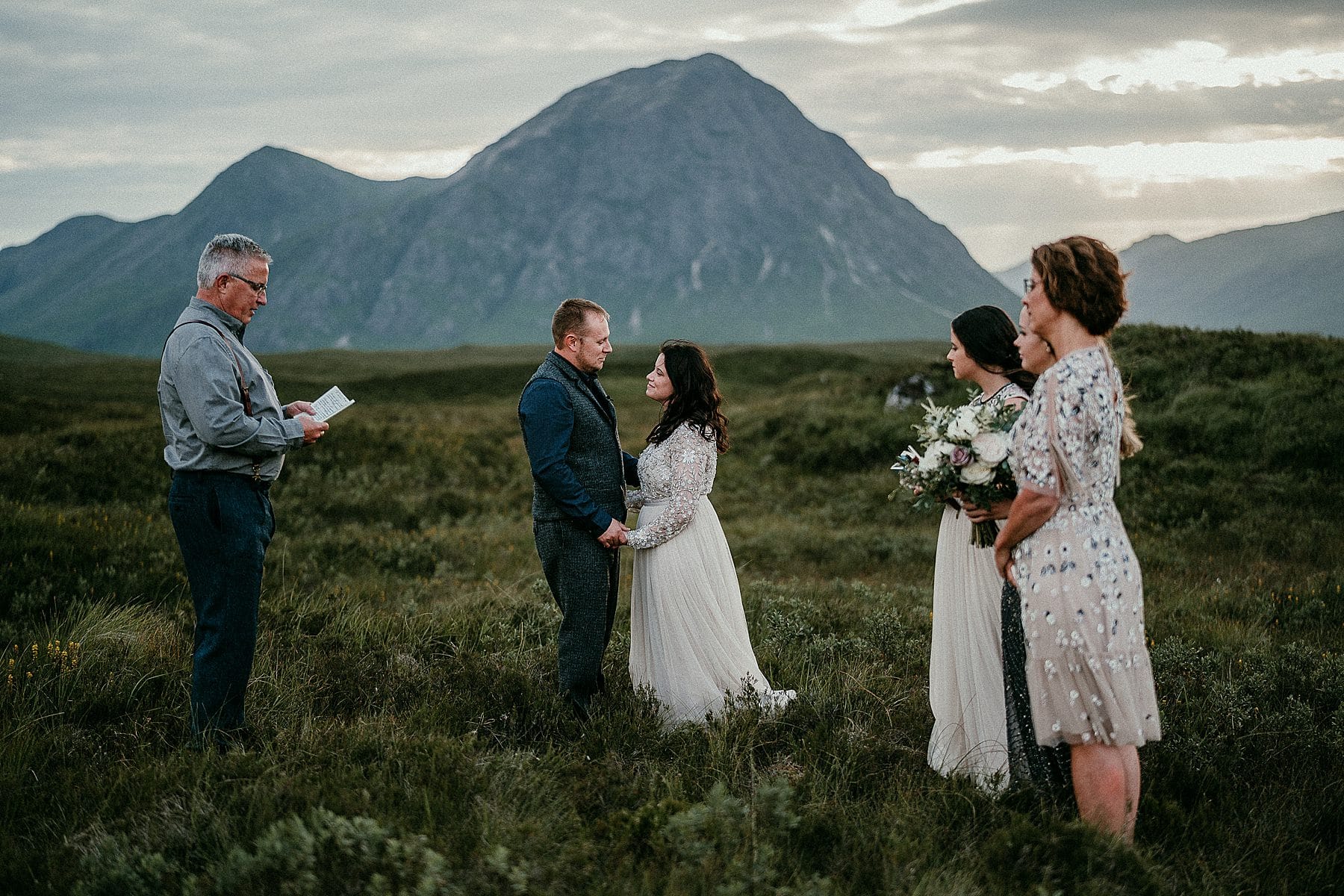
If you’re planning a winter elopement in places like Ireland, Northern Ireland, Scotland, the Faroe Islands, or Norway, moody skies, dramatic landscapes, and wild conditions are part of the magic. These locations are at their most cinematic in fall, winter, and early spring—when crowds disappear and the scenery feels raw and untamed.
For couples planning an Eloping in Ireland experience, winter can be one of the most rewarding seasons to elope—but only if you’re properly prepared for the cold, wind, and changing conditions. Staying warm isn’t just about comfort; it’s the difference between enduring your day and actually enjoying it.
As an adventure elopement photographer based in Northern Ireland, I’ve photographed 300+ elopements, many of them in winter and shoulder seasons. The tips below are exactly what I share with my own couples to help them stay warm, relaxed, and fully present while they exchange vows and explore incredible landscapes.
Written by Rob Dight
Rob Dight is an adventure elopement photographer based in Northern Ireland and the founder of Epic Love Photography. He has photographed 300+ elopements for couples travelling from the U.S., with over a decade of experience planning and photographing elopements across Ireland and Northern Ireland—including winter and shoulder-season conditions. Rob’s work and expertise have been featured by the BBC, and he specialises in helping couples plan meaningful, weather-proof elopement days in wild, exposed landscapes.
Learn more about eloping in Ireland or explore Northern Ireland elopements.
10 Top Tips For Staying Warm During Your Winter Elopement
As an adventure elopement photographer based in Northern Ireland, I’ve shot a pile of elopements where the conditions have been challenging. The tips I’m about to share with you are what I recommend to all my couples, it’s so important to me that my couples have the best elopement day possible. Part of that is preparing them before the big day so that they are as warm as possible when they’re saying their vows & adventuring with me.
Quick Winter Elopement Warmth Checklist
If you’re planning a winter elopement in Ireland, Scotland, Iceland, or another cold-weather destination, these are the most effective ways to stay warm during your day:
- Bring a wool shawl or wrap to block Atlantic wind on exposed cliffs.
- Pack a hot drink flask for warming up between locations.
- Choose a dress or jacket designed for wind exposure.
- Wear thermal base layers under your dress or suit.
- Use hand warmers, foot warmers, and body warmers strategically.
- Wear waterproof boots for traction and warmth on wet terrain.
- Bring a small hip flask for a celebratory toast on the cliffs.
- Plan a flexible timeline with shorter portrait stops between warm-ups.
- Keep moving during the day to maintain body heat naturally.
- Prepare a warm-up kit in the car with spare socks, blankets, and dry layers.
Below I break down each of these strategies in detail so you can stay warm, relaxed, and fully present during your winter elopement.
Here are my top tips to keep you warm when you’re eloping in a colder climate.
1. The Wool Shawl: Your Strategic Shield Against Atlantic Exposure
After photographing over 300 elopements along the Irish coastline, I’ve learned that the biggest threat to a winter wedding isn’t just the temperature—it’s the Atlantic wind chill. On the Causeway Coast or the cliffs of Donegal, a 6°C day can feel closer to -2°C the moment a 40mph Atlantic gust hits.
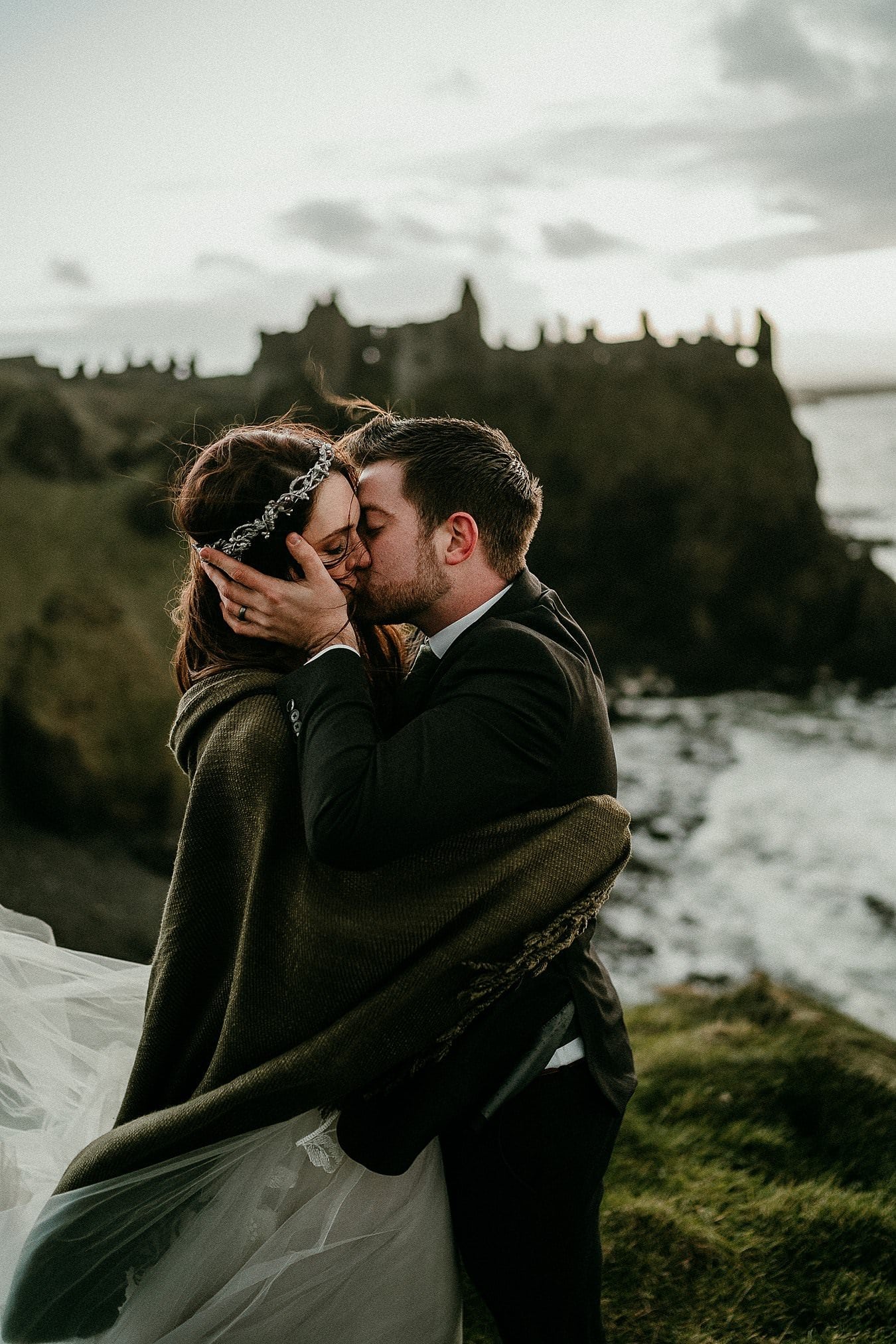
A heavy winter coat often hides the dress you’ve spent months choosing. Instead, I advise my couples to use a high-density wool wrap or shawl. Think of it as a strategic wind shield. Unlike a structured coat, a shawl allows for fluid movement, keeps the silhouette of your dress visible, and creates a critical barrier against sea spray and coastal wind at exposed locations like Dunluce Castle or Kinbane Castle.
If you’re still preparing for your trip, I recommend reading my guide on what to pack for an Ireland elopement. It breaks down the exact layers and practical gear couples need for unpredictable coastal weather.
Why Material Science Matters for the Irish “Wet-Cold”
To stay warm on a cliffside in January, the fabric you choose matters. Ireland’s winter climate isn’t just cold—it’s a damp Atlantic cold, which means you need materials that retain heat even when exposed to mist and sea spray.
Through years of observing how different fabrics perform in real elopement conditions, I’ve found two materials consistently outperform everything else.
100% Merino Wool
This is my top recommendation for U.S. couples. Merino wool is a naturally technical fiber with excellent thermal regulation and breathability. Unlike synthetic fabrics, Merino continues insulating even when slightly damp, making it ideal for Ireland’s misty coastal climate.
It’s lightweight enough for the short hike to your ceremony location, but the moment you stop moving it traps body heat effectively, helping you stay comfortable during portraits.
Ireland’s weather can also change quickly, so couples should always prepare for rain as well as wind. I explain exactly how to handle that in my guide on what to do if it rains on your elopement day.
Traditional Donegal Tweed
For couples expecting strong coastal winds, Donegal tweed offers a rugged and naturally wind-resistant option. Historically woven to protect Irish fishermen and farmers along the Atlantic coast, it has a dense structure that acts almost like a soft wind shell.
Because of its weight, it doesn’t whip around in high gusts, making it far easier to manage during portraits than lighter silk or synthetic wraps.
The “Functional Heirloom”: Heritage Irish Mills
Many of my couples choose to buy their shawl once they land in Ireland, turning a practical piece of weather protection into a meaningful heirloom from their trip.
I always recommend sourcing from heritage Irish weaving mills, where craftsmanship has been refined for centuries.
Foxford (County Mayo)
Founded in 1892, Foxford is one of the last working woollen mills in Ireland. Their blankets and throws are globally respected for their warmth and durability, designed specifically to perform in the damp Atlantic climate of the west coast.
Avoca (County Wicklow)
Established in 1723, Avoca is Ireland’s oldest working weaving mill. Their wraps come in beautiful color palettes that photograph exceptionally well against Ireland’s dramatic coastal landscapes.
The Photographer’s Edge
Choosing the right color makes a huge difference in your photographs. I usually recommend tones like ochre, moss green, or deep rust.
These colors create a cinematic contrast against the dark basalt rock of the North Coast and the deep greens of the Irish countryside, helping your photos feel intentional and timeless rather than simply practical.
Common Question: Will a Shawl Be Enough to Keep Me Warm?
In my 13+ years photographing along the Irish coast, I’ve found that a premium wool wrap paired with thermal layers (see Tip #4) is usually more than enough to keep couples comfortable during their ceremony and portraits.
That said, I always keep my vehicle nearby with a small “rescue kit” of blankets and hot coffee—just in case the Atlantic weather decides to remind us who’s really in charge that day.
2. The Hot Flask Strategy: How to Stay Warm During an Ireland Winter Elopement
When you’re planning a winter elopement in the exposed landscapes of Ireland, staying warm is a game of internal temperature management. Packing a steaming flask of coffee or tea isn’t just a comfort; it’s a tactical tool to prevent the “shiver response” before it starts. After 13 years and 300+ coastal elopements, I’ve seen this simple step completely transform the energy of a day. I’ve watched as shoulders finally relax and genuine laughter returns the moment that first hit of heat reaches a couple’s core.
From a practical perspective, keeping your internal temperature up is what keeps blood flowing to your extremities. It is much easier to exchange rings and hold hands for photos when your fingers aren’t stiff or blue from the cold weather and relentless coastal wind.
Field-Tested Gear for Your Adventure
In my experience, standard plastic thermoses don’t stand a chance against an Irish winter gale. If you elope with me, I always have a high-performance, vacuum-insulated flask (like a YETI or Stanley) waiting in the car. These are essential because they keep liquids steaming hot for hours, even when we’re parked at a wind-swept trailhead like Kinbane Castle or The Gobbins.
- The Energy Boost: While coffee is a classic, many of my U.S. couples opt for Hot Chocolate. This isn’t just a treat; the quick calories act as vital fuel for your body to generate heat while navigating a rocky path or hiking between ceremony spots.
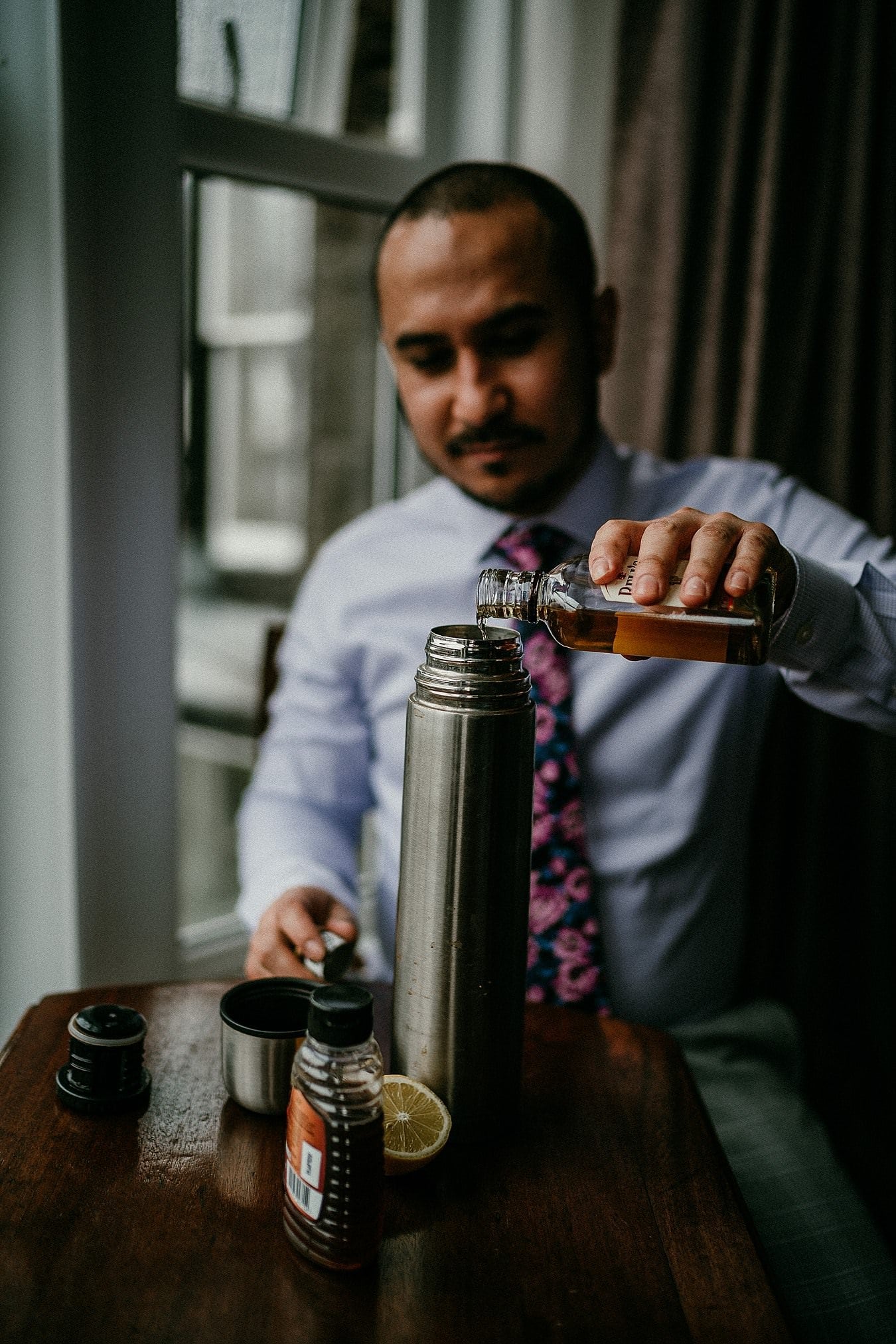
- The Cultural “Glow”: A traditional Irish Hot Toddy (whiskey, honey, lemon, and cloves) is a fantastic way to celebrate your new marriage. The steam provides immediate relief to your face and lungs, while the honey and lemon offer a soothing “internal glow” after a ceremony in the Atlantic mist.
Integrating Warming Breaks into Your Timeline
The key to a successful adventure elopement is structured warming breaks. I build these directly into your day so you never feel like you’re simply “enduring” the environment:
- Post-Ceremony Reset: A quick 5-minute “thaw out” with a hot drink immediately after your vows resets your temperature before we start your formal portraits.
- The Location Transition: Between spots like Dunluce and Ballintoy, we use the drive time to hydrate and reheat. This is often when the best “behind the scenes” stories happen.
- The Blue Hour Push: Having a hot drink ready before the sun goes down ensures you have the emotional energy to stay present for those final, epic sunset shots.
The “Cup-as-Heater” Technique: Don’t just drink—wrap your bare hands around the warm flask between photo sets. It’s the fastest way to get feeling back into your fingers. When you feel physically warm, your entire mood shifts; you relax, and that relaxation is what allows me to capture the authentic, joyful moments you actually want to remember.
3. Winter Elopement Dress Tips: Staying Warm on the Irish Coast
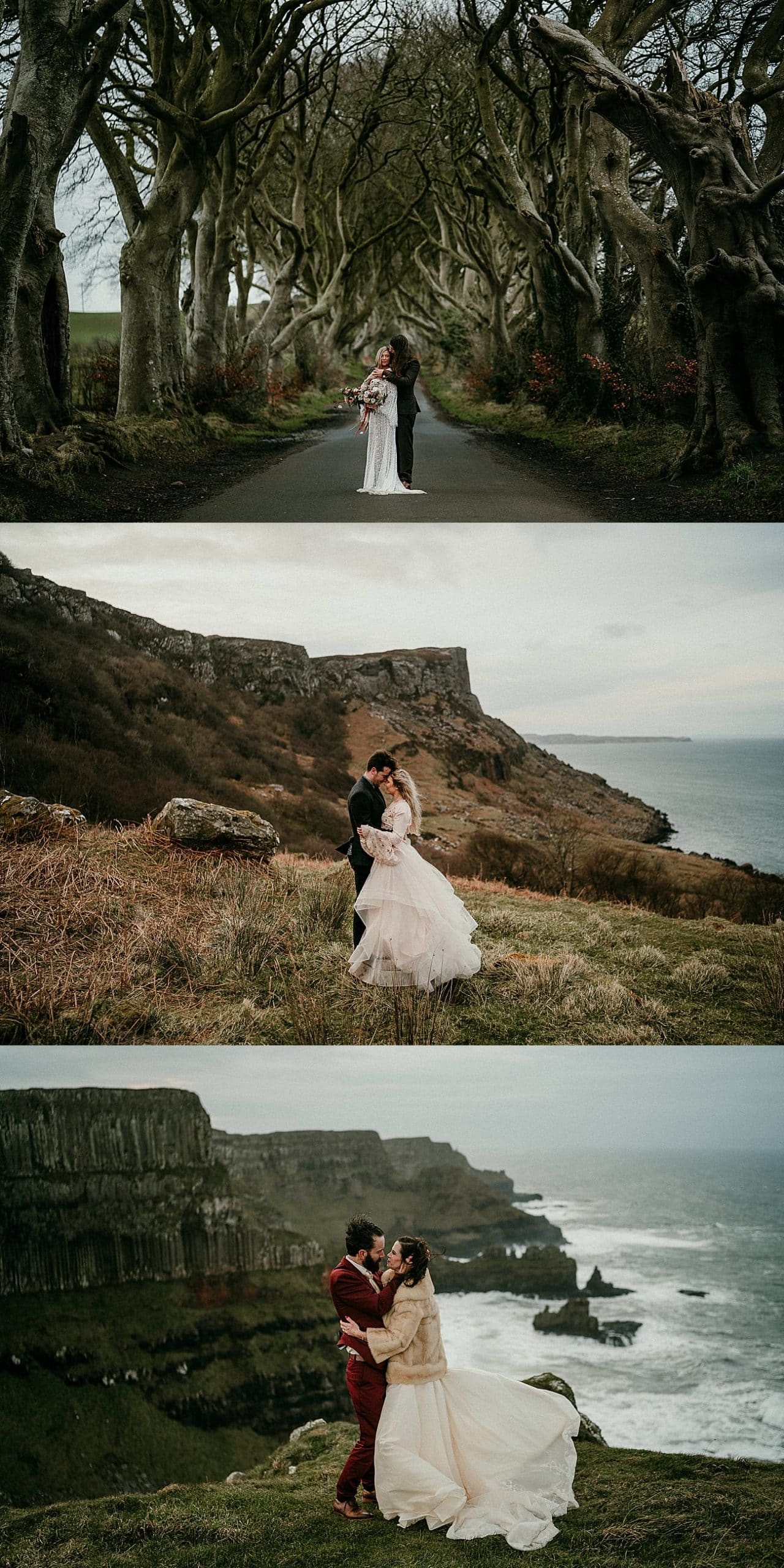
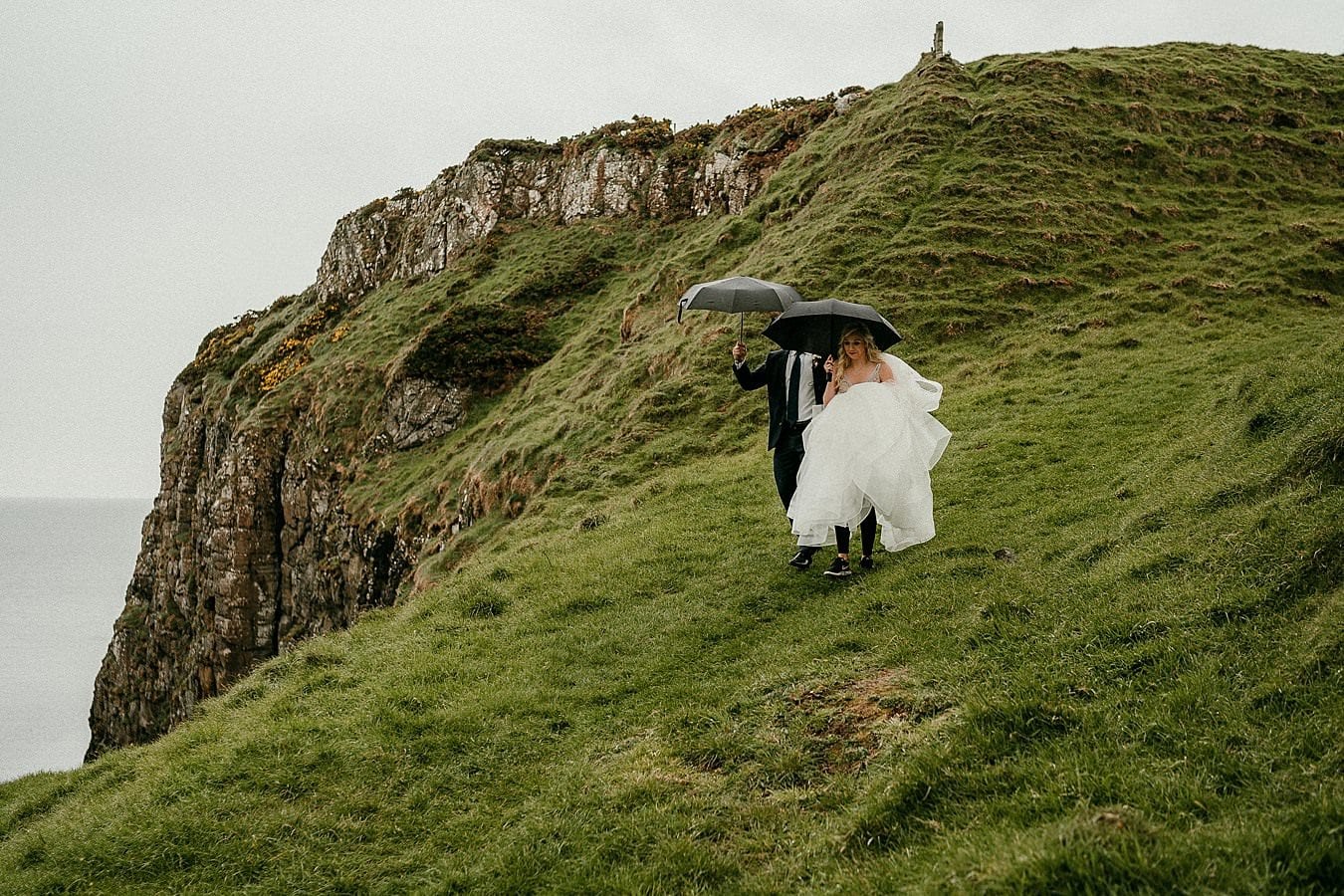
After 13 years of navigating the wild North Antrim shoreline and the cliffs of Donegal, I’ve seen one consistent mistake: underestimating how quickly the Atlantic wind-chill cuts through a standard wedding gown. Even on a day that looks clear, the coastal wind speeds at locations like the Giant’s Causeway frequently hit 20–30mph. On a cold weather elopement, that airflow can make the ambient temperature feel significantly lower.
The temptation is often to choose a sleeveless gown and simply hope the weather cooperates. However, for a winter elopement in Ireland, your physical comfort directly dictates the quality of your gallery. When you’re cold, your posture instinctively tightens—your shoulders rise, your neck disappears, and your expressions become guarded. When you’re warm and relaxed, you move with a natural fluidness that is the foundation of authentic, cinematic photography.
Choosing the Right Fabric for an Adventure Elopement
If you haven’t finalized your attire yet, the weight and weave of your dress fabric will make a significant difference in how warm you stay. On exposed cliff locations, the fabric determines how much of that Atlantic breeze reaches your skin.
Lace Sleeves
Lace provides a beautiful, timeless aesthetic, but it offers very little wind resistance. If your heart is set on lace, I recommend pairing it with high-performance “nude-to-you” thermal layers (which we’ll cover in Tip #4). This allows you to maintain the sheer look of the dress while still protecting your core temperature.
Crepe, Mikado, or Velvet
Heavier fabrics such as crepe, mikado, or velvet act as a far better wind barrier. These dense materials provide a layer of built-in insulation that blocks the damp coastal air and allows you to stay comfortable during your ceremony and portraits.
The “Narrative Jacket”: Outer Layers That Tell a Story
Many brides plan to wear a bulky puffer coat between locations and remove it for the “real” photos. As an adventure elopement photographer, I usually advise against this.
The most meaningful images of your day rarely happen during the pose. They happen during the transitions—when you’re hiking a coastal trail together, laughing between locations, or helping each other over mossy stone stiles along the shoreline.
If you’re wearing a neon ski jacket during those moments, we lose the visual continuity of your story. Instead, choose a photogenic outer layer you’re happy to see in your photos:
Custom Leather or Denim Jackets
A great choice for couples who want a rugged, modern look while still blocking much of the coastal wind.
Faux Fur Stoles
Perfect for adding cinematic texture and warmth against Ireland’s dramatic, moody landscapes.
Tailored Wool Overcoats
A classic option that provides excellent warmth while maintaining a refined, elegant silhouette.
The Reality of an Active Elopement
An Ireland elopement is rarely stationary. We are often walking coastal paths, climbing over stone stiles, and exploring rocky shorelines to reach remote viewpoints.
By choosing a dress with sleeves or a stylish outer layer, your visual story remains consistent from the moment we leave the car until the final sunset portrait. You’re not just enduring the walk to your ceremony—you’re fully immersed in the adventure.
If you’re planning a day like this, my Northern Ireland elopement guide explains the best locations, seasons, and logistics for planning an elopement along the Causeway Coast and North Antrim shoreline.
Expert Insight: Can I Just Use Hand Warmers Instead?
Hand warmers are excellent for keeping your fingers comfortable, but they won’t prevent the core heat loss that happens when your arms and shoulders are exposed to strong coastal winds.
A well-chosen jacket or long-sleeve dress protects your core temperature, which is what truly allows you to stay relaxed and joyful while exchanging your vows and exploring the landscape.
4. Thermal Base Layers: The “Invisible” Strategy for Cold-Weather Elopements
One of the most effective ways to stay warm during a winter elopement in Ireland is also the most overlooked. Because most wedding dresses are floor-length, the space beneath your gown can easily fill with cold air on exposed coastal cliffs. On locations like the Causeway Coast or the North Antrim shoreline, strong Atlantic winds can move underneath a dress surprisingly quickly, pulling warmth away from your body.
This is where thermal base layers make a huge difference. Worn underneath your dress or suit, they trap a thin layer of warm air close to your skin, helping maintain your core temperature even when you’re standing on an exposed cliff edge or walking a coastal trail.
If you’re still deciding what to wear for your elopement, my guide to choosing the perfect dress for an Ireland elopement explains how different fabrics, silhouettes, and sleeve styles perform in real Irish weather. If you’re still in the early planning stages, my complete guide to eloping in Ireland covers everything from locations and seasons to the practical logistics couples need to know before planning their day.
Why Thermal Leggings Work So Well Under Wedding Dresses
Most wedding gowns naturally hide what you’re wearing underneath, which means you can add significant insulation without affecting the elegance or silhouette of your dress.
Heat Retention in Large Muscle Groups
Your legs contain some of the largest muscles in your body. Keeping them warm helps stabilize your overall body temperature and reduces the likelihood of shivering during your ceremony or portraits.
Protection from Coastal Wind
On exposed locations like Donegal or the Giant’s Causeway, wind can move underneath a dress easily. Thermal layers act as a barrier between your skin and that cold airflow.
Comfort While Moving
Unlike bulky jackets or coats, base layers move naturally with your body. This makes it much easier to walk coastal paths, climb stone steps, and explore rocky shorelines during your elopement.
Choosing the Right Discreet Base Layer
To keep these layers invisible in high-resolution photographs, the details matter.
Fleece-Lined Tights or Thermal Leggings
For most gowns, fleece-lined leggings or tights are the simplest and most reliable option. Choosing a “nude-to-you” tone ensures they remain invisible even if your dress has a slit or sheer elements.
Thermal Shapewear
For fitted dresses such as crepe or silk gowns, thermal shapewear provides warmth while maintaining a smooth silhouette under the fabric.
Merino Wool Base Layers
Merino wool thermals are an excellent option for colder climates. They regulate body temperature well and remain comfortable even if you encounter mist, sea spray, or damp coastal air.
Don’t Forget the Groom
Wedding suits are often surprisingly wind-permeable, particularly when standing on exposed cliffs. I always recommend that grooms wear merino long johns or thermal base layers underneath their suit trousers.
This small adjustment can make a huge difference in comfort during a winter elopement on the Irish coast, especially during ceremonies or portraits when standing still.
Pro Tip for Dresses With High Slits
If your dress has a high slit, choose toeless thermal leggings or pair thermal tights with wool socks that match your boots. This allows you to maintain the visual style of the dress while keeping most of your legs insulated from the cold coastal wind.
Winter Elopement Warmth Comparison Guide
| Item | Best For | Main Strength | Watch Out For |
|---|---|---|---|
| Merino wool shawl | Windy cliff locations | Warm even in damp air | Can be expensive |
| Donegal tweed wrap | Strong coastal wind | Dense and wind-resistant | Heavier to carry |
| Thermal leggings | Under floor-length gowns | Invisible warmth | Choose nude tones for slits/sheers |
| Adhesive body warmers | Ceremony + portraits | Keeps core warm | Don’t place directly on skin |
| Waterproof boots | Wet trails and rocky ground | Dry feet + grip | Break them in first |
| Hot flask | Between locations | Fast mood and warmth reset | Needs refilling for long days |
5. Hand Warmers, Foot Warmers & Body Warmers: Small Tools That Make a Big Difference
When you’re standing on an exposed cliff edge along the Causeway Coast or the cliffs of Donegal, the Atlantic wind can pull heat from your body surprisingly quickly. Some of the most effective tools for staying comfortable during a winter elopement in Ireland are also the smallest.
Hand warmers, foot warmers, and adhesive body warmers are lightweight, inexpensive, and incredibly effective when used strategically. These small heat packs generate steady warmth for several hours and can quickly restore comfort when the wind picks up during portraits.
I always keep a handful in my camera bag because they’re one of the fastest ways to help couples warm up between locations.
Where to Place Warmers for Maximum Effect
Hand Warmers
Hand warmers are perfect for restoring warmth to your fingers between photo sets. Cold hands can make simple moments—like exchanging rings or holding hands—feel stiff and awkward. A quick warm-up helps restore circulation so your hands look relaxed and natural in photos.
Foot Warmers
Foot warmers sit inside your boots and keep your toes comfortable even when standing on cold stone paths or damp coastal ground. For best results, choose adhesive toe warmers that attach to the top of your socks. Placing them underneath your feet can sometimes compress them inside tight boots and actually reduce circulation.
Adhesive Body Warmers (The Lower Back Trick)
Adhesive warmers can be placed on the inside of your clothing, usually over the lower back or kidney area. Warming this part of your body helps maintain core temperature, which encourages steady circulation to your hands and feet. When your core stays warm, your fingers are far less likely to go numb during portraits.
A Simple Trick for Warmer Hands
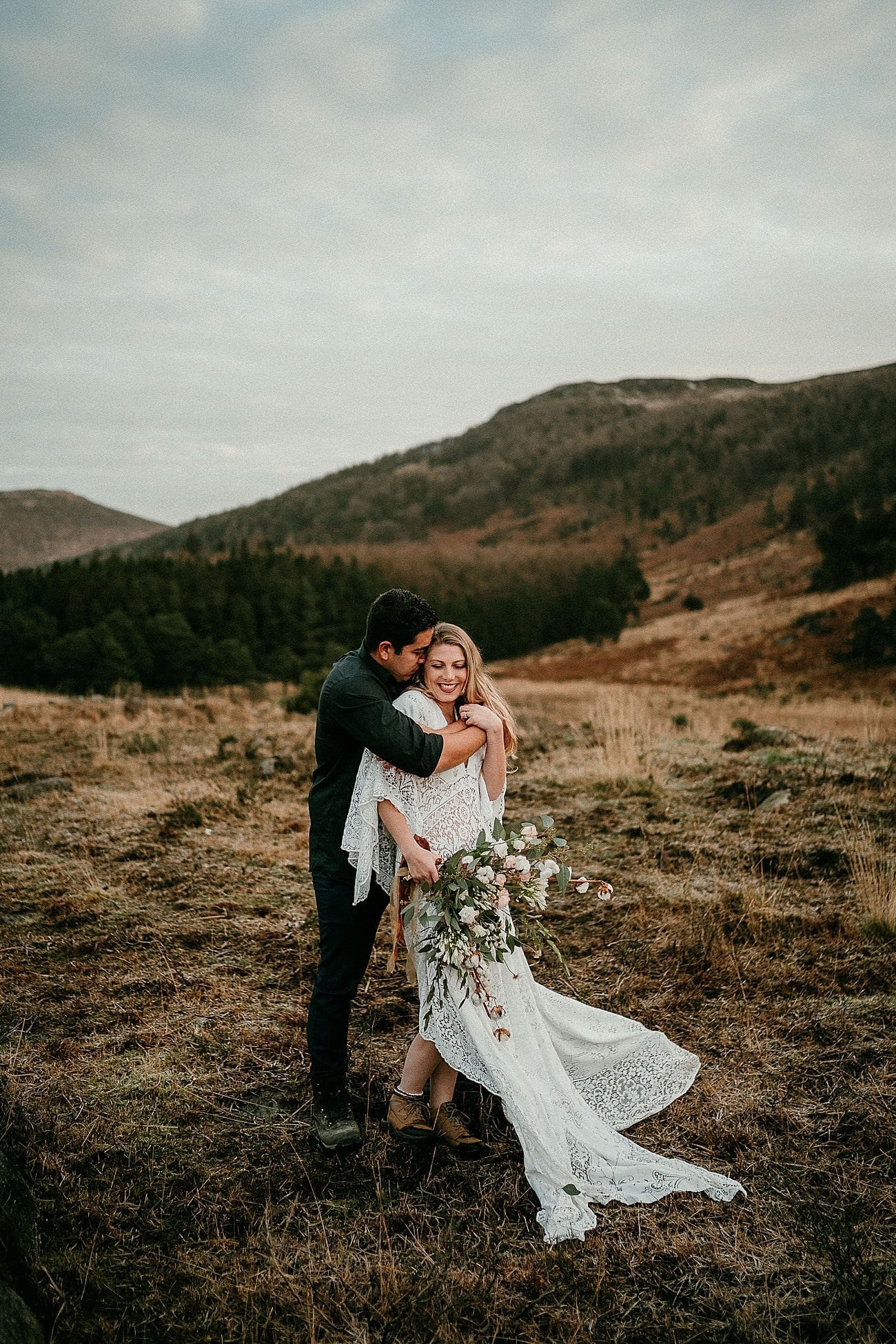
One small trick many couples love is placing a hand warmer inside the ribbon of a bouquet. Because your hands naturally rest there during photos, the warmth stays close to your fingers without being visible.
It’s a simple detail, but on a windy cliff edge it can make a big difference in how comfortable you feel throughout your elopement day.
The 3 Rules of Staying Warm During a Winter Elopement
Protect against wind with wraps, coats, and outer layers.
Protect your core temperature with thermal layers, warm drinks, and body warmers.
Protect against moisture with waterproof boots, spare socks, and a reset kit in the car.
6. Waterproof Boots: The Foundation of a Comfortable Elopement Day
Cold feet are uncomfortable. Cold and wet feet are miserable.
Many of the most beautiful elopement locations in Ireland, Scotland, Iceland, or Norway involve walking across grass, rocky shorelines, uneven cliff paths, or damp coastal terrain. Even on clear days, the ground along the North Antrim coast or the cliffs of Donegal is often wet from mist, sea spray, or overnight rain.
Because of that, a pair of waterproof boots is one of the most important pieces of gear you can bring for a winter elopement.
Why Waterproof Boots Matter
Protection from Damp Ground
Irish coastal landscapes rarely stay dry for long. Waterproof boots prevent moisture from soaking through when walking across grass, boggy fields, or coastal paths.
Grip on Uneven Terrain
Cliff paths, mossy rocks, and basalt stones—especially around places like the Giant’s Causeway—can become slippery in mist or rain. Boots with proper grip provide much better stability than smooth-soled dress shoes.
Warmth Through Insulation
Waterproof boots help block wind and moisture while retaining warmth. When paired with thermal socks or foot warmers, they keep your feet comfortable even in winter conditions.
The Best Footwear Strategy for Elopements
Many couples choose to wear boots for the hike or walk between locations, then briefly switch into dress shoes if they want a few photos in them.
Others fully embrace the adventure and wear stylish boots throughout the day. Against Ireland’s rugged coastal landscapes, boots often look more natural and authentic than delicate formal shoes anyway.
When your feet are warm, dry, and stable on the terrain, your whole body relaxes. Your shoulders drop, your smile becomes genuine, and you can focus on enjoying the experience instead of worrying about slipping on a rock or soaking your shoes.

7. The Hip Flask: A Traditional “Warmth” Ritual for Irish Elopements
One of my favourite winter elopement traditions is remarkably simple: sharing a small hip flask on the cliffs. It might seem like a minor detail, but when you’re standing in a biting Atlantic wind, that small moment can become the emotional turning point of the day—shifting the focus from the cold to the celebration.
The inspiration for this advice came during the “Beast from the East” cold snap in 2018, when an Arctic weather system brought unusually freezing temperatures to Ireland. I photographed two elopements back-to-back during those conditions. Both couples faced the same icy wind and bitter cold, but the couple who brought a flask had a completely different energy.
That small shared sip allowed them to reset, laugh, and stay present in the landscape rather than retreating from it. Since then, I’ve often suggested the idea to couples planning winter elopements along the Irish coast.
The Psychology of a “State Change”
From a scientific perspective, alcohol doesn’t actually increase your core body temperature. In fact, it can create a temporary warming sensation by bringing blood closer to the surface of the skin.
But an elopement day is not a survival scenario—it’s a celebration.
That quick sip from a flask often creates an immediate shift in mood and energy. Shoulders drop, laughter returns, and the moment becomes less about the wind and more about the experience you’re sharing together. That relaxed state is exactly what allows the most natural, joyful photographs to happen.
Incorporating a Quaich Ceremony
If you want to turn this simple moment into a meaningful ceremony element, you can incorporate a Quaich (pronounced “quake”).
The Quaich is a traditional two-handled “cup of friendship” used in Scottish and Irish culture. Sharing a drink from the Quaich symbolizes trust, unity, and the blending of two lives together.
Many couples love including this ritual during their ceremony or immediately after their vows. It adds a beautiful cultural touch and creates a meaningful photographic moment overlooking places like Kinbane Castle, Dunluce Castle, or the Causeway Coast.
If you’re interested in incorporating traditions like this into your ceremony, I share more ideas in my guide to elopement ceremony ideas.
A Classic Irish Touch
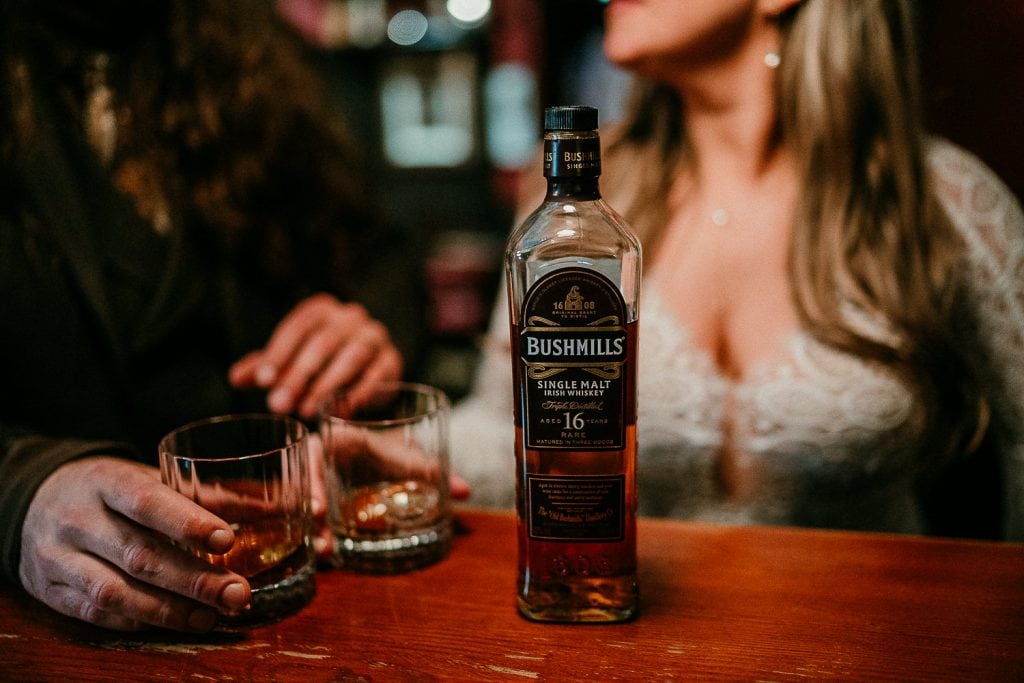
If you want to lean into the local heritage of the North Coast, many couples choose Irish whiskey for their flask. Bushmills is a popular option—its distillery sits just minutes from some of the most iconic elopement locations along the Antrim coast.
A small toast overlooking the Atlantic can feel like a quiet but meaningful part of your story.
A Quick Safety Note
A hip flask is best used as a celebratory moment rather than a full drink break. Elopements often involve walking cliff paths, exploring rocky shorelines, and navigating uneven terrain.
A single celebratory sip is more than enough to bring that sense of warmth and celebration while keeping everyone steady on their feet as we move between locations.
8. The Flexible Timeline Strategy: Short Stops Keep You Warm
In 13 years of photographing elopements along the North Antrim coastline, I’ve learned that the real enemy of a winter elopement isn’t the cold itself — it’s standing still in it.
Long, static portrait sessions work beautifully in summer. In winter, they often leave couples freezing. Instead, I structure winter elopement timelines around short 15–20 minute portrait sessions at multiple locations.
We might explore a dramatic viewpoint like Kinbane Castle, capture a quick set of portraits, and then head back to the car to warm up before moving on to the next location.
Think of the car as a mobile basecamp that allows us to reset between locations.
Why This Works So Well
You Avoid the “Deep Chill”
Shorter portrait sessions mean you never reach the point where the cold fully sets into your hands and feet.
We Can Follow the Best Light
Moving between spots like Ballintoy Harbour and Dunluce Castle allows us to adapt to shifting winter light and weather.
You Stay Relaxed and Energised
The short drives between locations give you time to warm up, laugh, and actually take in the fact that you just got married.
Work With a Photographer Who Can Adapt
This approach only works with a photographer who understands local weather patterns, access points, and micro-climates along the coast.
If you’re still choosing your photographer, I explain what to look for in my guide on how to choose an elopement photographer
9. Movement Is Your Secret Weapon Against the Cold
One of the easiest ways to stay warm during a winter elopement is surprisingly simple: keep moving.
Walking along a coastal path, climbing over stone stiles, or exploring a rocky shoreline naturally generates body heat. This keeps your muscles warm and your circulation flowing, which helps prevent cold hands and stiff posture.
Movement doesn’t just help with warmth — it also creates the most authentic photographs of the day.
Why Movement Creates Better Photos
Some of the most meaningful images rarely come from standing poses. They happen when couples are:
- walking hand-in-hand along a cliff path
- helping each other across rocks or streams
- laughing together in the wind
- exploring the landscape between locations
These natural moments tell the real story of your elopement.
And as a bonus, staying active keeps your body warm enough that when we do stop for portraits, you’re relaxed instead of shivering.
10. The Car as Basecamp: Your Winter Elopement Reset Kit
Your vehicle becomes the basecamp for your entire elopement day.
It’s where you warm up, change shoes, dry off from mist or rain, and reset between locations. When planning a winter elopement in Ireland, having a simple “reset kit” waiting in the car makes a huge difference.
Winter weather on the Irish coast can change quickly. You might start your ceremony in calm conditions and find yourself in sideways Atlantic mist ten minutes later.
Knowing you have a warm, dry reset waiting allows you to embrace the adventure instead of worrying about the weather.
Your Winter Elopement Reset Kit
Most couples keep a small kit in the car with things like:
Microfiber Towels
Perfect for drying hair, hands, or faces after rain or sea spray.
Spare Wool Socks
Nothing drains your energy faster than damp feet. A fresh pair of merino socks instantly boosts comfort.
Extra Blankets
Wool blankets help you warm up quickly between locations.
A Change of Shoes
Even if you’re wearing waterproof boots, switching into dry shoes during the drive between locations can make a big difference in comfort.
These small resets between locations help maintain your energy, warmth, and excitement throughout the day.
The 2026 Winter Elopement Technical Cheat Sheet
While the tips above are the foundation for a great day, the logistics of an Irish winter are won or lost in the details. Here is the technical breakdown I share with my couples to ensure we aren’t just surviving the cold, but using it to our advantage:
| Factor | Technical Specification / Recommendation |
| Light Window | In December and January, the “Golden Hour” starts as early as 2:45 PM. Ceremonies should be wrapped by 1:30 PM for maximum cliffside visibility before the light drops. |
| Wind Chill Factor | An 8°C (46°F) day on the Causeway Coast feels like 2°C (35°F) with Atlantic gusts. I recommend a minimum 200 GSM weight for thermal leggings to block the wind. |
| Fabric Performance | Merino Wool: 10/10 (Moisture-wicking in Irish mist). Silk/Satin: 4/10 (Retains cold when damp). Fleece-lined Tights: An absolute essential for floor-length gowns. |
| Footwear Rating | Boots must have a GORE-TEX or equivalent waterproof membrane. Avoid leather soles; they are a safety hazard on wet basalt (like at the Giant’s Causeway). |
| The “Hot Pocket” Strategy | Place adhesive body warmers over the kidneys and the base of the spine. This tricks the nervous system into maintaining blood flow to your hands and feet. |
Embracing the Wild Beauty of a Winter Elopement
Adventure elopements in the colder seasons really are something special. The couples who choose to elope in winter usually aren’t chasing perfect weather — they’re chasing an experience.
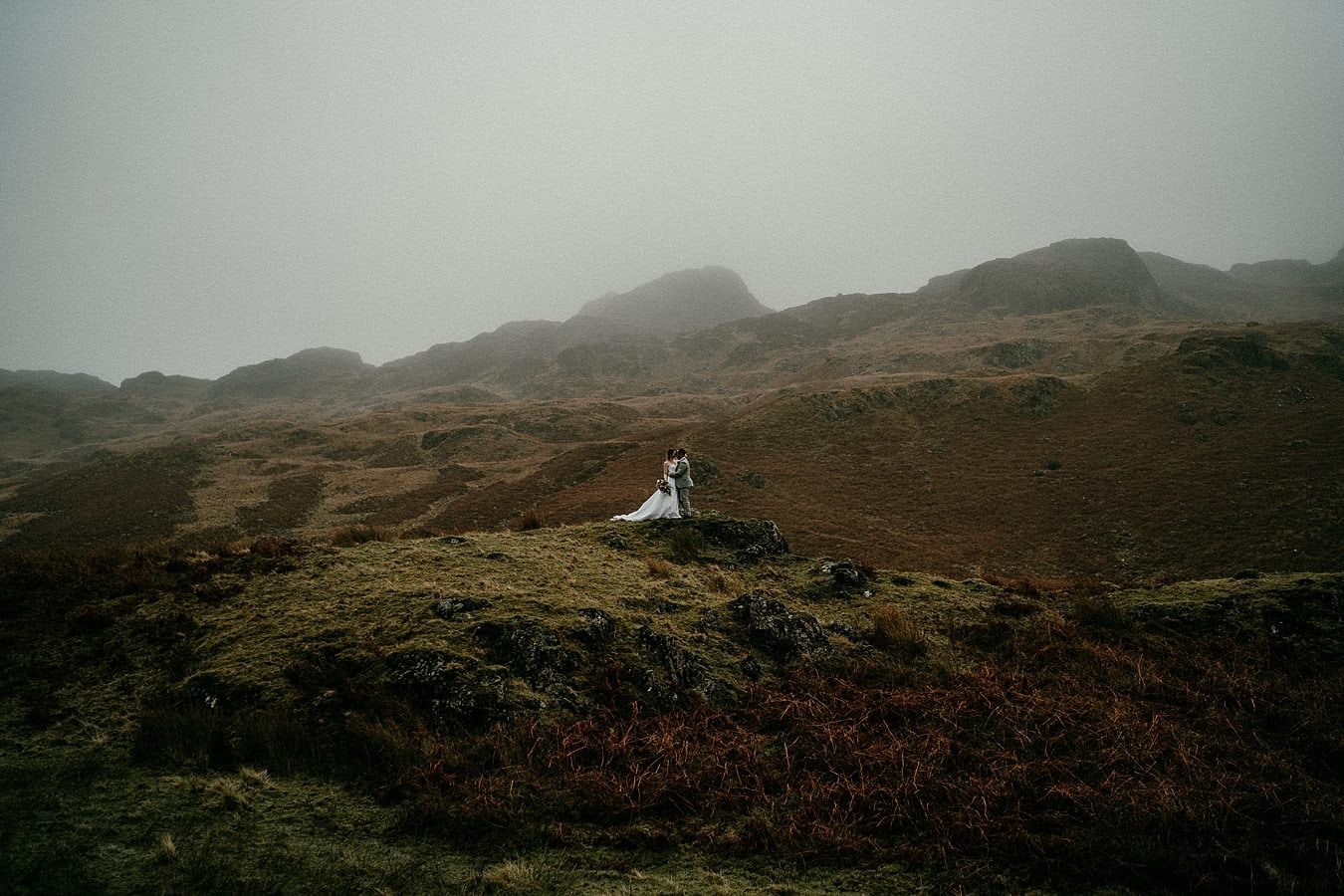
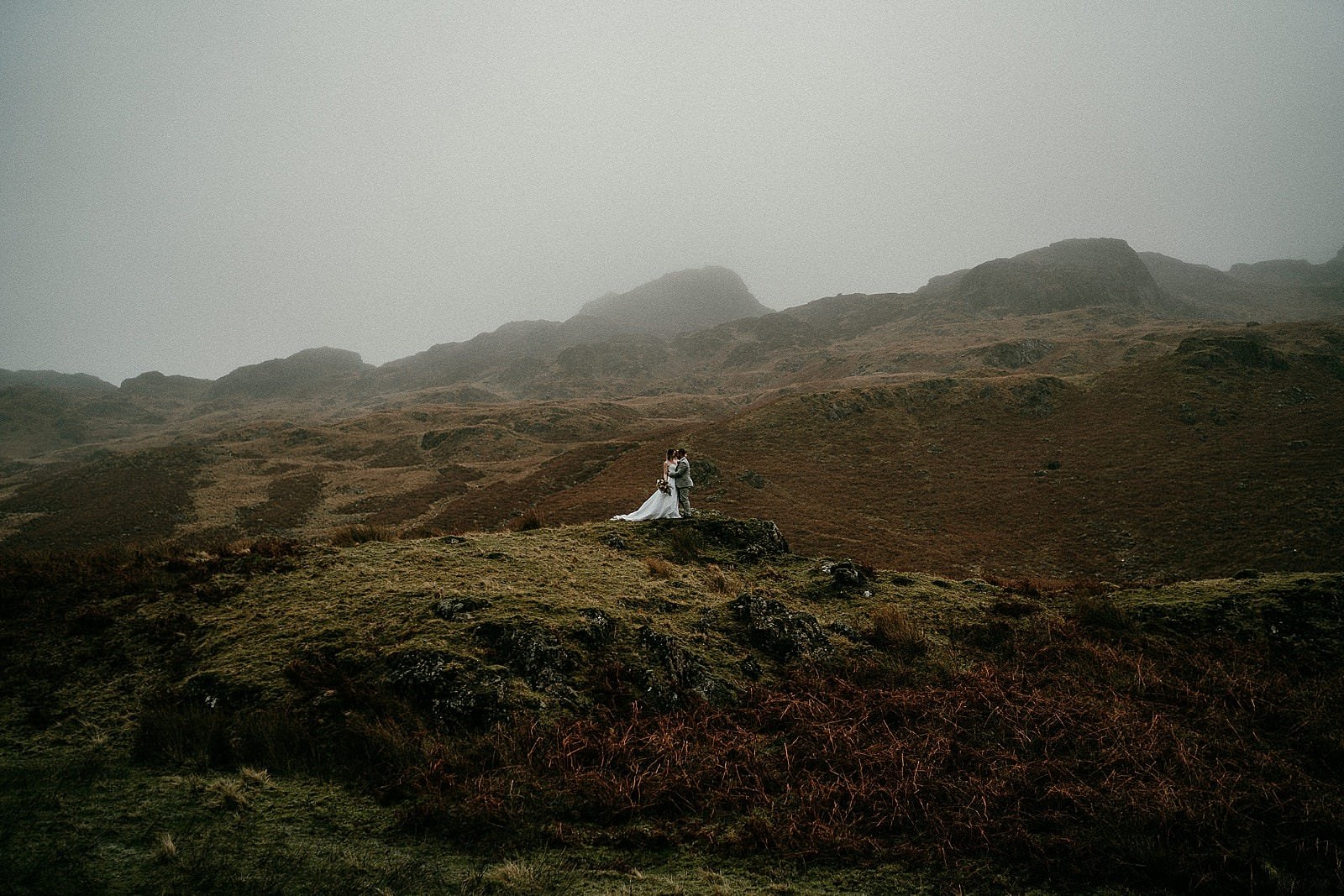
Along the Irish coast, winter brings a completely different atmosphere. The crowds disappear, the Atlantic becomes wilder, and the landscape feels raw and cinematic. Mist rolls across the cliffs, the light becomes softer and moodier, and the entire coastline feels like it belongs just to the two of you.
Some of the most powerful images I’ve ever photographed have happened in the middle of what most people would call “bad” weather. Rain, wind, or sea spray doesn’t ruin an elopement day — if anything, it often makes it more memorable.
When couples stop worrying about the conditions and start embracing the adventure, everything changes. The photos become more natural, the moments feel more real, and the day turns into the kind of experience you’ll remember for the rest of your lives.
Warm, Prepared, and Fully Present
The goal of everything in this guide isn’t just to help you survive the cold — it’s to help you stay comfortable enough that you can actually enjoy your elopement day.
When you’re warm, dry, and relaxed, you can focus on the moments that matter:
the vows
the laughter
the quiet walk along the cliffs
the moment it finally sinks in that you just got married
After photographing 300+ elopements over the past 13 years, I’ve learned that preparation makes all the difference. With the right layers, a flexible timeline, and a little help from a photographer who knows the landscape, winter elopements can be some of the most incredible experiences imaginable.
Planning Your Own Winter Elopement?
If you’re thinking about eloping in Ireland or Northern Ireland — especially during winter or the quieter shoulder seasons — I’d love to hear about your plans.
I specialise in helping couples create relaxed, adventure-filled elopement days along the Irish coast, and I’m always happy to help couples figure out what their day could look like.
Get in touch here and tell me about your plans.
More Elopement Planning Resources
If you’re still in the planning phase, these guides will help you build an incredible elopement day—no matter the season:
- Eloping in Ireland: The Complete Planning Guide
- Northern Ireland Elopements
- What to Do If It Rains on Your Elopement Day
- Elopement Checklist for Ireland
Winter Elopement FAQ
Can you elope in Ireland in winter?
Yes — winter can be one of the most beautiful times to elope in Ireland, but it requires proper planning for wind, rain, shorter daylight hours, and cold coastal conditions.
How do you stay warm during a winter elopement?
The biggest difference comes from layering properly, blocking the wind, using thermal base layers, wearing waterproof boots, and building warm-up breaks into your timeline.
Can I wear a sleeveless dress for a winter elopement?
Yes, but you’ll usually need a proper warmth strategy around it, such as thermal base layers, a wool wrap, and a photogenic outer layer for transitions.
What shoes should I wear for a winter elopement in Ireland?
Waterproof boots are usually the best choice for walking on wet grass, rocky paths, and cliffside terrain.
What time should a winter elopement ceremony start in Ireland?
In December and January, earlier is better. For most winter elopements, I recommend planning the ceremony well before late afternoon so there is still enough light for portraits.
About the Author
Rob Dight is an adventure elopement photographer based in Northern Ireland and the founder of Epic Love Photography. He has photographed 300+ elopements for couples travelling from the U.S. and around the world, with over a decade of experience across Ireland & Northern Ireland. Rob’s work and expertise have been featured by the BBC, and he is known for helping couples plan meaningful, weather-proof elopement days in wild and remote locations. His approach focuses on real experiences, honest moments, and expert local planning—especially for couples eloping in Ireland during the winter and shoulder seasons.
Learn more about Rob’s approach to eloping in Ireland or explore his Northern Ireland elopements.