
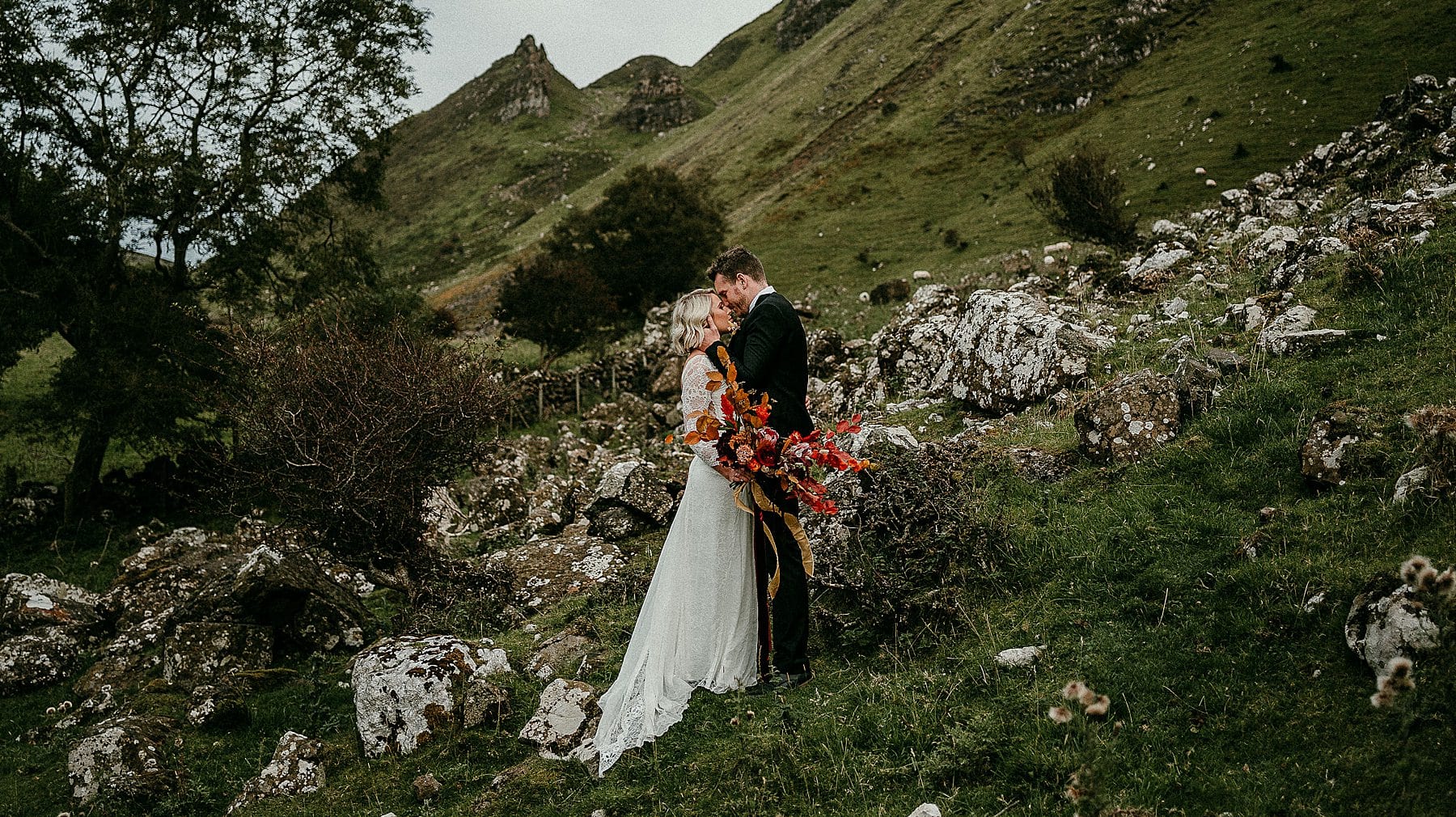
Eloping in Ireland from the USA in 2024 – The BEST Guide for American Couples!
Table of Contents
*Updated December 15th 2023
Helping couples from the USA elope in Ireland since 2014!
I shot my first elopement in 2014; a young couple from the U.S. booked me because they loved my photos; at the time, I didn’t realize it was going to change my life. That day changed EVERYTHING for my photography business. I fell in LOVE with elopements!
My business is totally devoted to helping couples from the States have incredible elopement experiences here in Ireland. It didn’t take me long to realize that for my clients, it can feel pretty daunting trying to plan an elopement in another country, so I’ve made it my mission to make the process totally stress-free! In the last 10 years, I’ve helped hundreds of couples just like you plan the most amazing elopements in Ireland!
My record fastest time to help a couple plan their elopement is 17 days, from initial inquiry to being here and getting married. So don’t stress! I’ve got you covered. I’m your Ireland elopement expert & I’m here to help you have the MOST AMAZING elopement in Ireland!
Ireland is the best place in the world for your adventure elopement!
If you’re considering eloping in Ireland or Northern Ireland in 2024 or 2025, you must read this blog! So many couples are planning their dream elopement days in Ireland. I’m an adventure elopement photographer & planner, and I’m here to help you have the most amazing experience when you elope here on the Emerald Isle. I’ll be your tour guide around the most beautiful places for your Ireland elopement.
Why should you elope in Ireland?
An Ireland elopement is a total dream for your adventure elopement wedding day! With its rugged coastlines, ancient Castles, rolling green hills, rich history & friendly people, it makes for a fairy tale setting. There are so many natural attractions to adventure together in. So many modern couples are ditching their traditional wedding plans because they want a stress-free day that is about their relationship. When couples decide to elope, they often feel like a huge weight has been lifted from their shoulders. The burden of trying to please so many people & big wedding plans just aren’t for some couples.
Your adventurous wedding dreams can come true when you say yes to an elopement in Ireland!
Could you imagine saying your vows in front of an Irish Castle, then heading to epic cliff tops for portraits, then having your first drink (it’s got to be Guinness!) as a married couple in an Irish pub, and maybe even having your first dance there too! All these things can happen if you choose Ireland as the destination for your elopement or small wedding. Your special day will be your greatest adventure so far!
Where to Elope in Ireland & Northern Ireland? The 20 Top Elopement Locations in Ireland for 2024!
As an Ireland elopement photographer, I’m constantly on the lookout for the best elopement locations for my couples to get married. Ireland seriously has so many places that are unreal, it really is one of the best places to elope in Europe!
Here are, in my opinion, the 20 best places to elope in Ireland. You will not believe how many incredible locations there are on this small island! These 20 places are the most beautiful places in Ireland!
- Dunluce Castle, Co Antrim, Northern Ireland
- Kinbane Head, Co Antrim, Northern Ireland
- The Cliffs of Moher, Co Clare, Ireland
- Menlo Castle, Co Galway, Ireland
- Murlough Bay, Co Antrim, Northern Ireland
- Hamiltons Seat, Co Antrim Northern Ireland
- Killarney National Park, Co Kerry, Ireland
- Dunseverick Castle, Co Antrim, Northern Ireland
- The Dingle Peninsula, Co Kerry, Ireland
- The Mourne Mountains, Co Down, Northern Ireland
- Ballintoy Harbour, Co Antrim, Northern Ireland
- The Howth Cliffs, Co Dublin, Ireland
- The Dark Hedges, Co Antrim, Northern Ireland
- The Slieve League Cliffs, Co Donegal, Ireland
- Corcomroe Abbey, Co Clare, Ireland
- The Wicklow Mountains, Co Wicklow, Ireland
- The Giants Causeway, Co Antrim, Northern Ireland
- Mussenden Temple & Downhill Demesne, Co Antrim, Northern Ireland
- The Connor Pass, Co Kerry, Ireland
- White Park Bay, Co Antrim, Northern Ireland
1. Dunluce Castle, Co Antrim
Number one on my list for anyone planning to elope to Ireland would have to be Dunluce Castle. It is one of the most beautiful places in Ireland! This iconic castle is situated on the County Antrim Coastline in Northern Ireland. It’s an absolute fairytale spot to get married! Built in the 1500s this medieval ruin casts a dramatic & imposing shadow on the Causeway Coastline. The ancient ruin was actually built on the rocks of the coastal cliffs. As far as adventure elopement go it doesn’t get much more epic than this! Click HERE to check out my 2024 guide to Dunluce Castle elopements. If you’re planning to elope in Ireland you’ll struggle to find a more impressive location than Dunluce Castle.
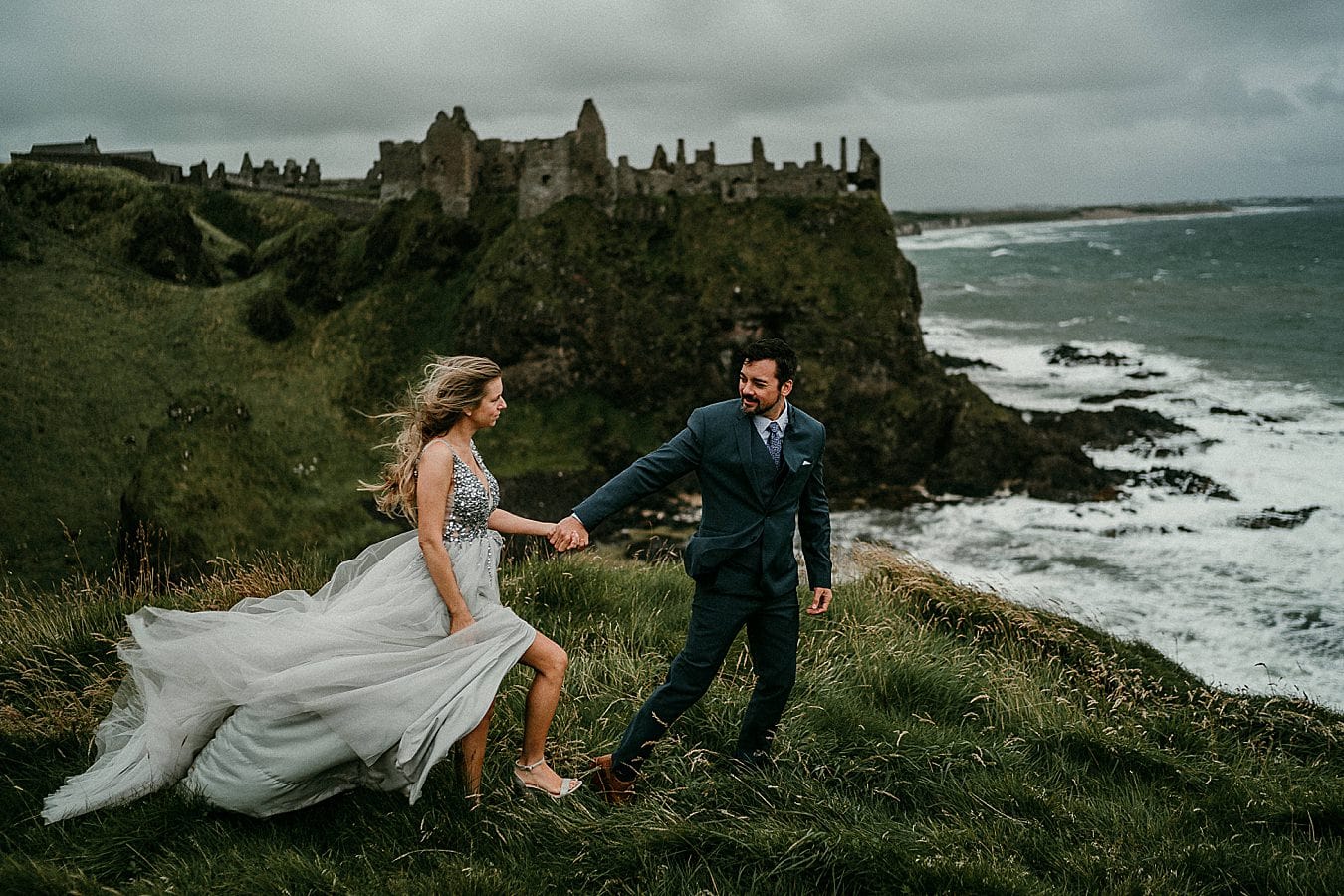
The field that overlooks Dunluce Castle is owned by a local farmer, so permission for access will need to be sought prior to the day of your elopement. If you choose this spot for your ceremony, there is a fee to pay to the farmer. I have the farmer’s contact information so I can arrange this for you.
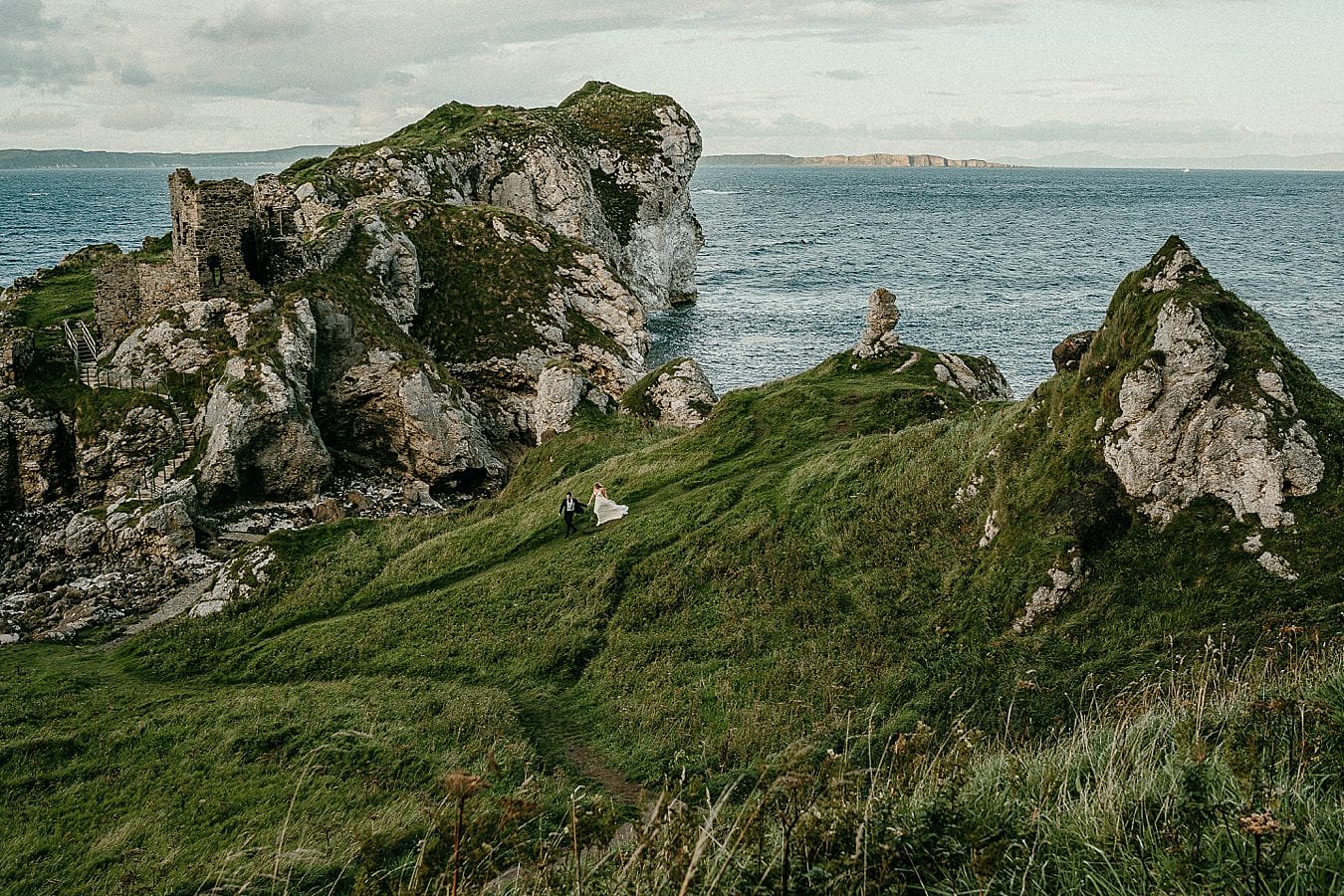
2. Kinbane Head, Co Antrim
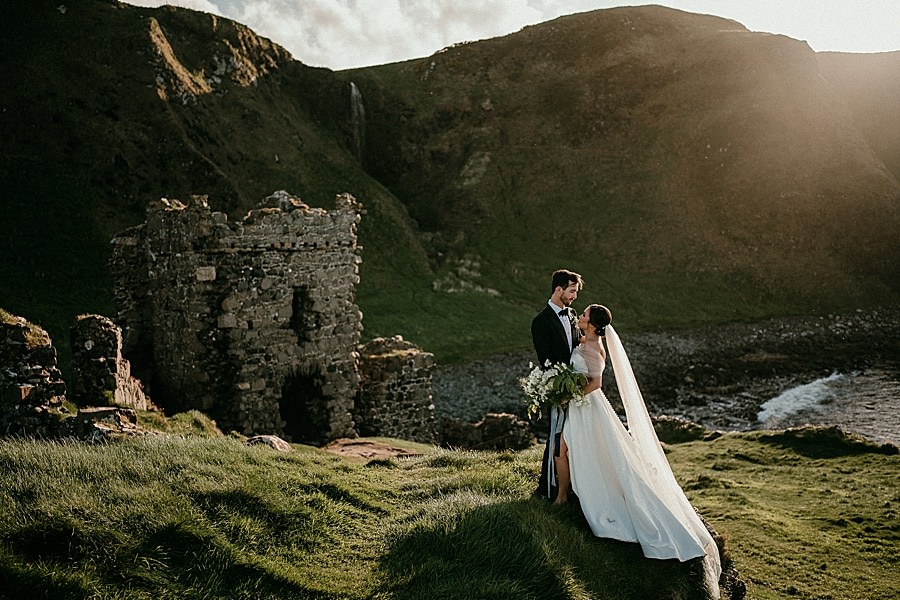
Rugged cliffs, an ancient Castle & a waterfall! Not many places can offer as much awesome stuff in one location. This is what eloping in Ireland is all about! Number 2 on my list is Kinbane Head. This place is a hidden gem, nestled in the Causeway Coastline of Northern Ireland. One of the best things about this place is that it’s not Insta famous so tourists won’t surround you whilst you’re saying your vows. There is a small hike down the steps, and you’ll see Kinbane Castle perched on the headland that juts into the sea; when you get to the bottom of the steps, you’ll be overwhelmed by the landscape; it feels like something from another planet. The amount of variety this place offers makes it a dream location for a photographer, and it’s ideal for anyone looking to elope in Ireland. To take a look at this incredible place, click HERE.
3. The Cliffs of Moher, Co Clare
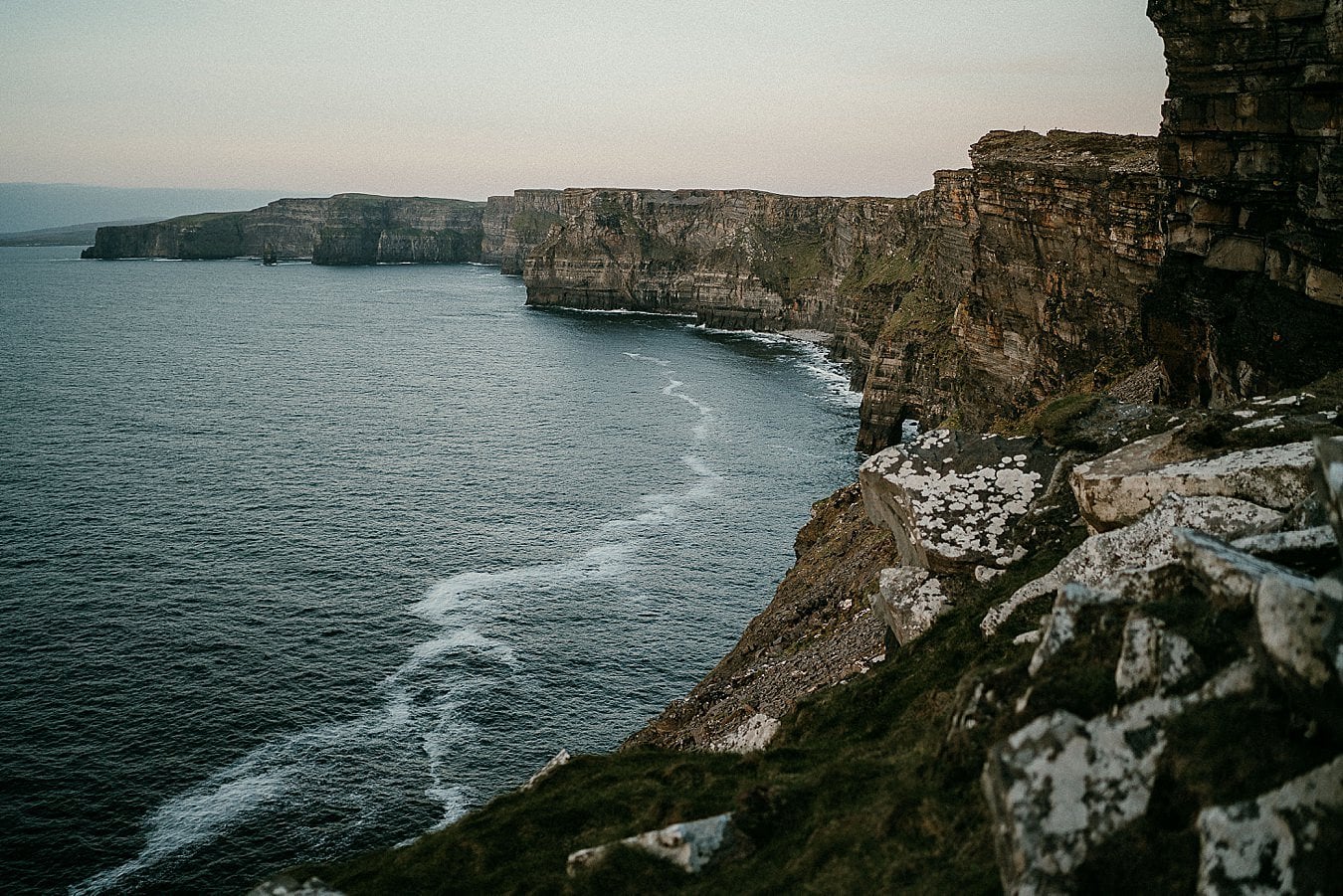
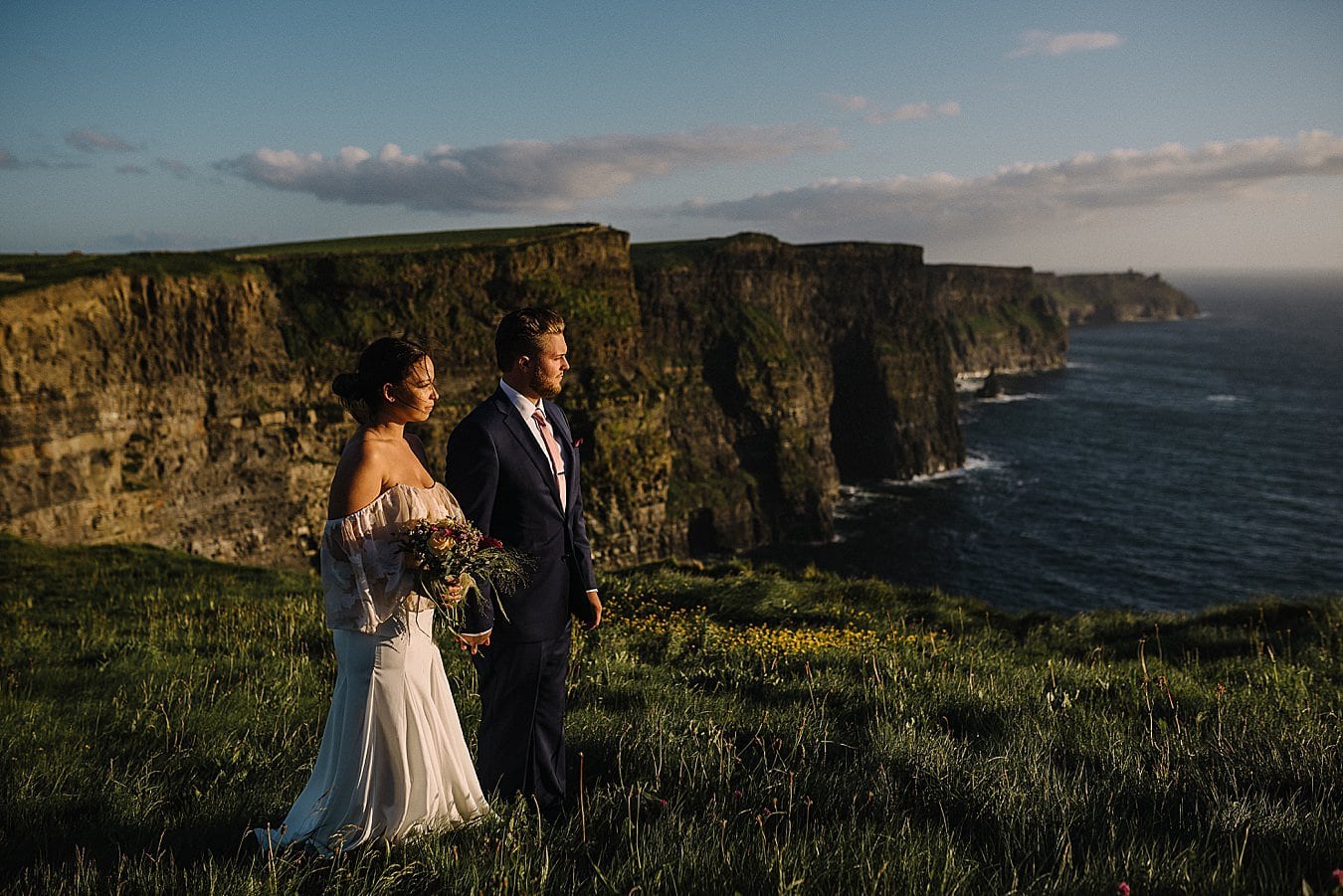
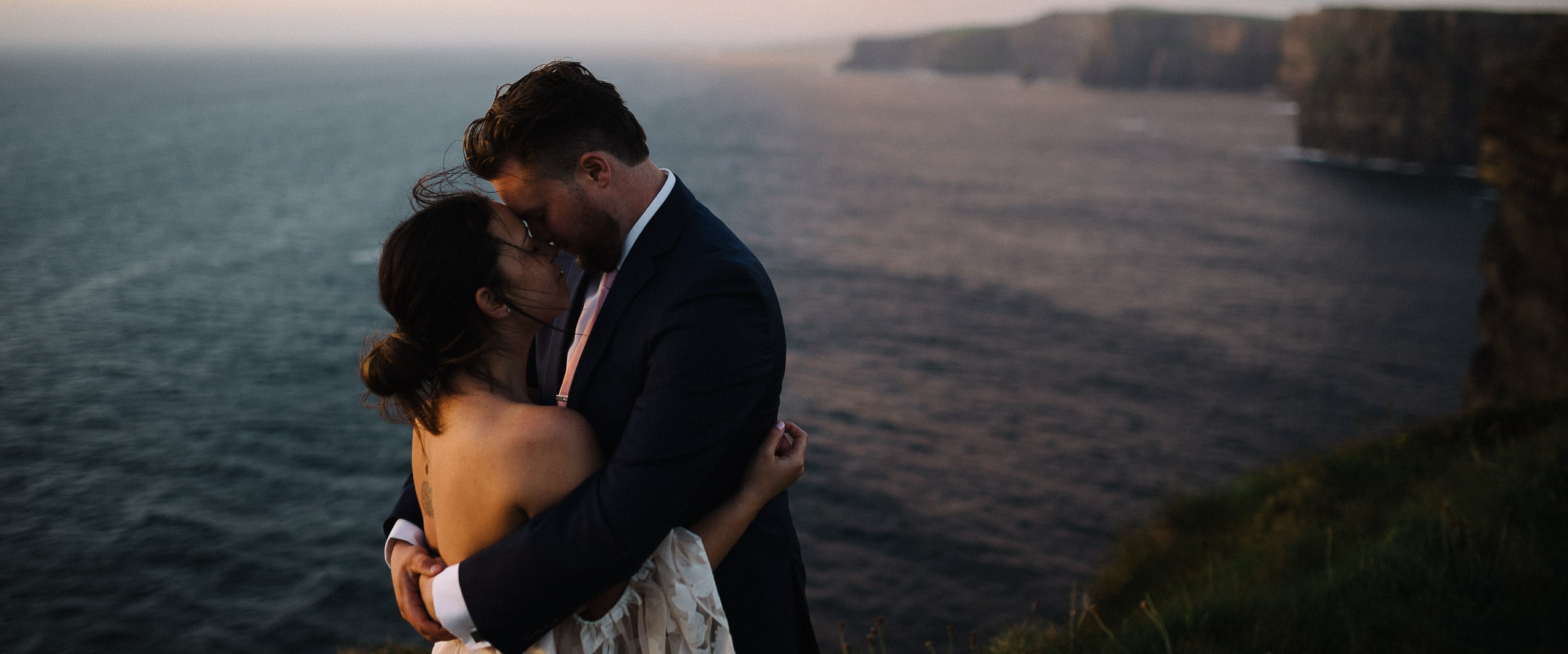
The Cliffs of Moher are possibly the most famous location for an Ireland elopement. Could you imagine saying your vows on the edge of a cliff 214 meters (702ft) above the waves of the Atlantic Ocean? The Cliffs of Moher have to be seen to be believed, and that’s why they are 3rd in this list of the best places to elope in Ireland. Have a look at an Irish elopement on the Cliffs of Moher HERE.
The Cliffs of Moher is one of the most iconic locations in Ireland and is very popular for elopement weddings. When couples start their Irish elopement journey, it’s often the first place they tend to look at; this is not a bad thing because it is amazing. You just have to go to places where there aren’t hundreds of tourists. One other thing to consider is even in summer, the wind on top of the cliffs can be very cold, so if you do get married here, you’ll need something to keep you warm. One of the best spots for an elopement ceremony is Hags Head as you’re able to hire the area from a local farmer and drive pretty much up to the cliff edge.
4. Menlo Castle, Co Galway
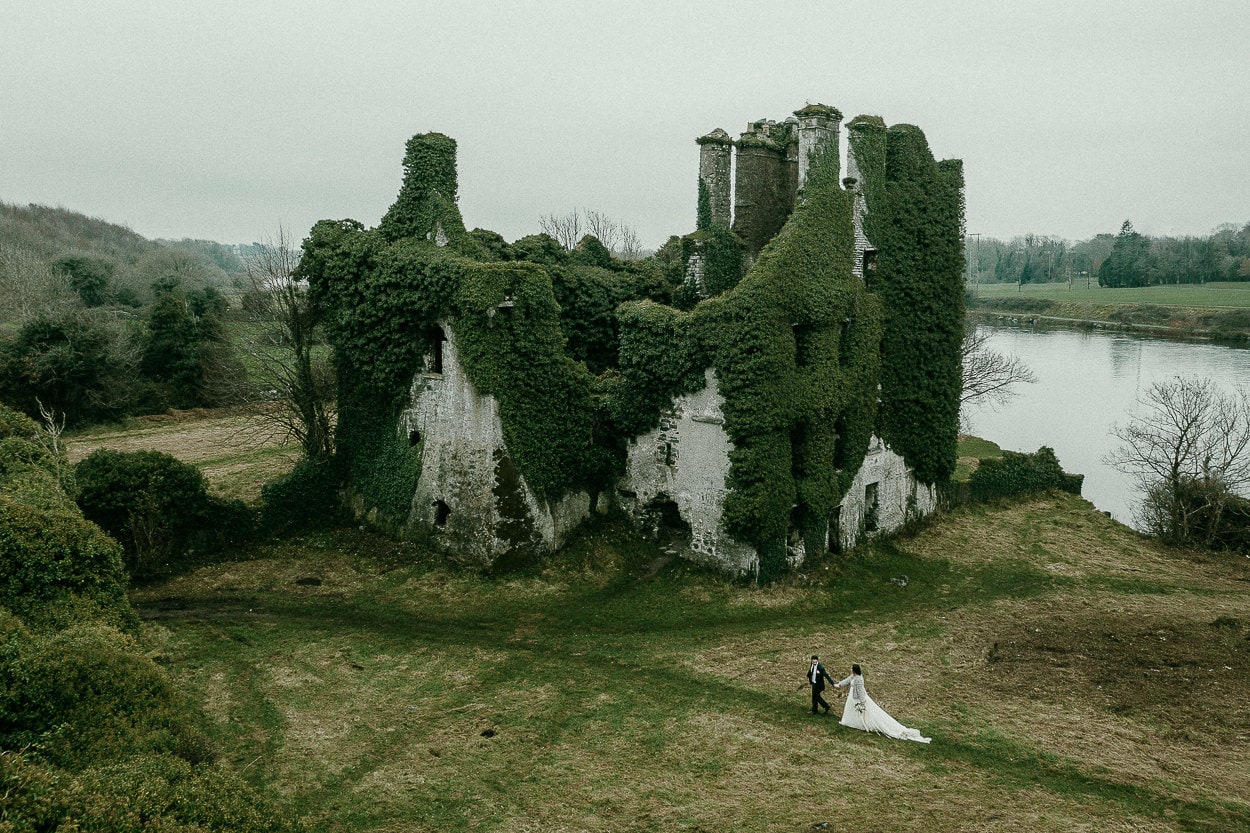
If you’re considering eloping in Ireland in 2024, you no doubt have lots of lush green locations in mind! They don’t come much lusher or greener than the stunning 16th-century ruin of Menlo Castle. The whole outer walls are covered in vibrant green ivy and it looks like something from a fairytale. The castle is nestled in a stunning location on the banks of the River Corrib, which gently flows by. You are able to enter the ruin so you can have your ceremony inside or outside. The site is only 10/15 minutes outside of Galway, too, so it’s very easily accessible. Click HERE to take a look at an intimate destination wedding that took place at Menlo Castle.
5. Murlough Bay, Co Antrim
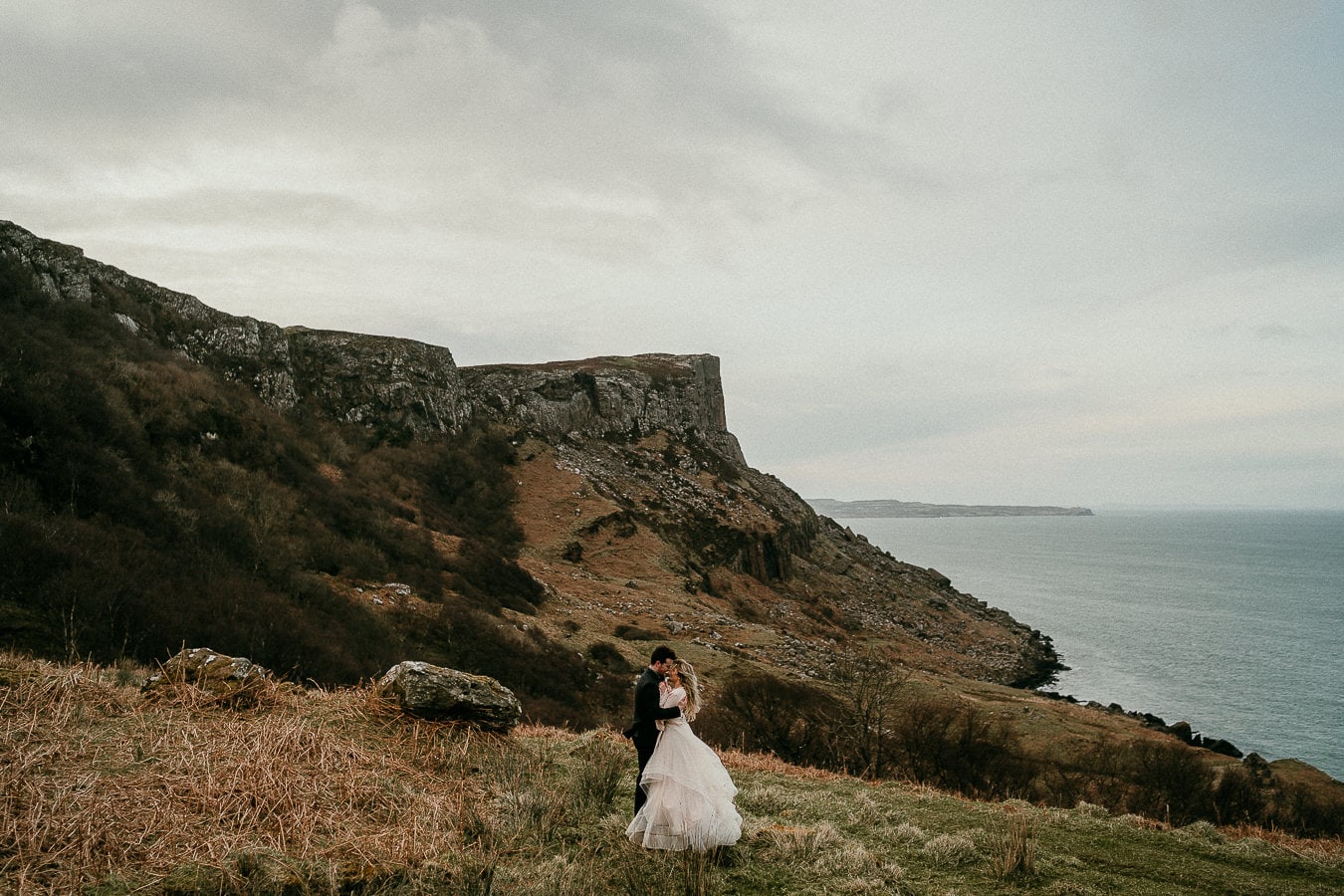
It is an incredible location that is often overlooked as it is near much more famous places on the Causeway Coast, such as Dunluce Castle or The Giant’s Causeway. For anyone planning to elope in Ireland, this spot has got to be considered; every time I shoot there, I’m blown away by how many incredible nooks & crannies there are here. Also, it’s amazing to go somewhere so beautiful and have no one else around. Game of Thrones used Murlough Bay for their filming & when you see it for yourself, you will quickly understand why. You could say your vows here, surrounded by huge cliffs & crazy rocks, with only the local sheep for witnesses; it really is a special place. Places like this are one of the reasons that Northern Ireland’s Causeway Coast is one of the best places in the world to elope. Click HERE to look at an adventure elopement that took place at Murlough Bay.
6. Hamiltons Seat, Co Antrim
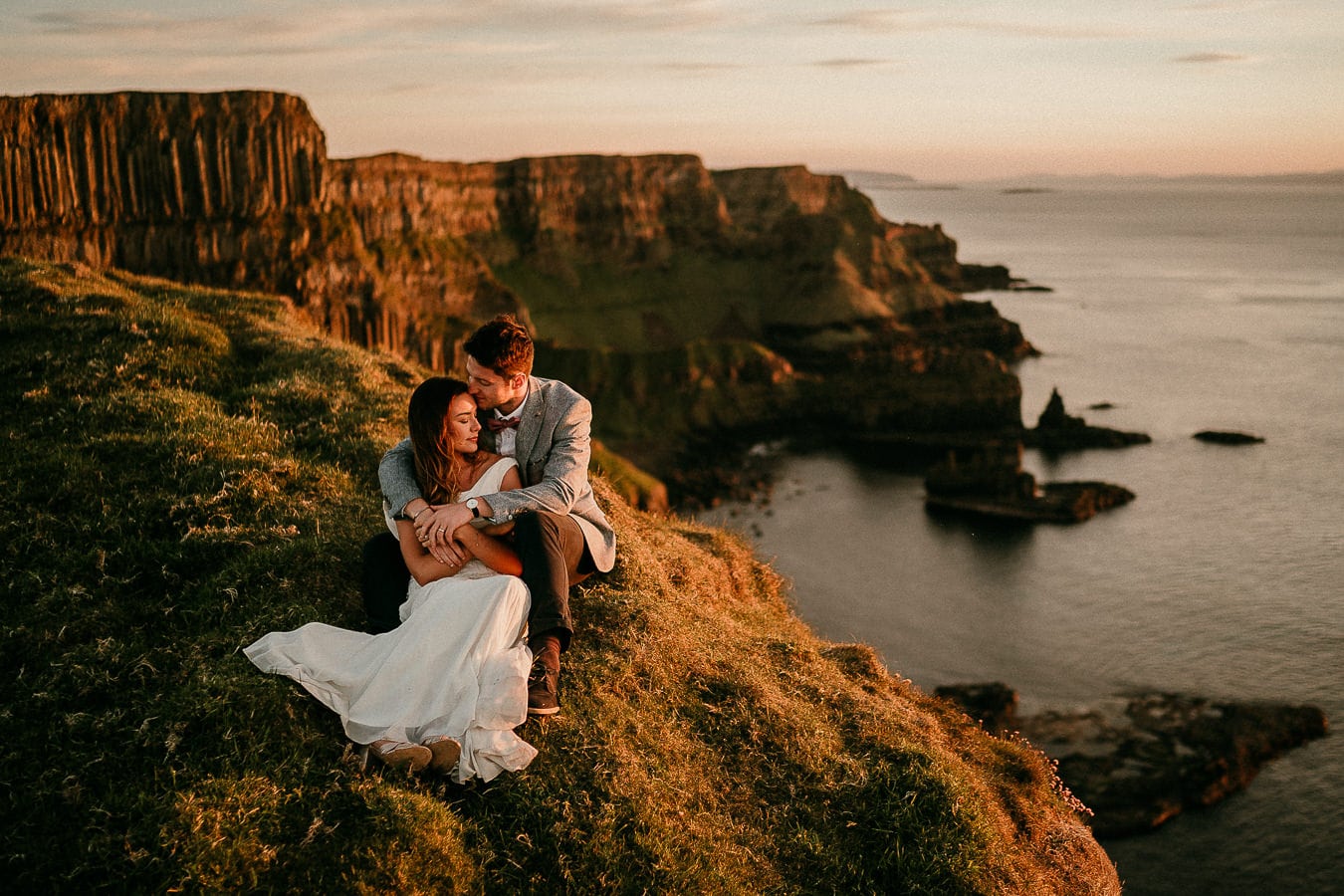
Maybe the most adventurous Ireland elopement location is Hamiltons Seat. Hundreds of feet above the Giant’s Causeway, the clifftop path offers breathtaking views, you could say your vows at any number of locations depending on how far you want to explore together. For the super adventurous couples, you could hike for an hour and have your ceremony at Hamiltons Seat, possibly the best view in the whole of Ireland. Click HERE to take a look at a vowel renewal on the clifftop path. This is possibly the most beautiful view in Ireland.
7. Killarney National Park, Co Kerry
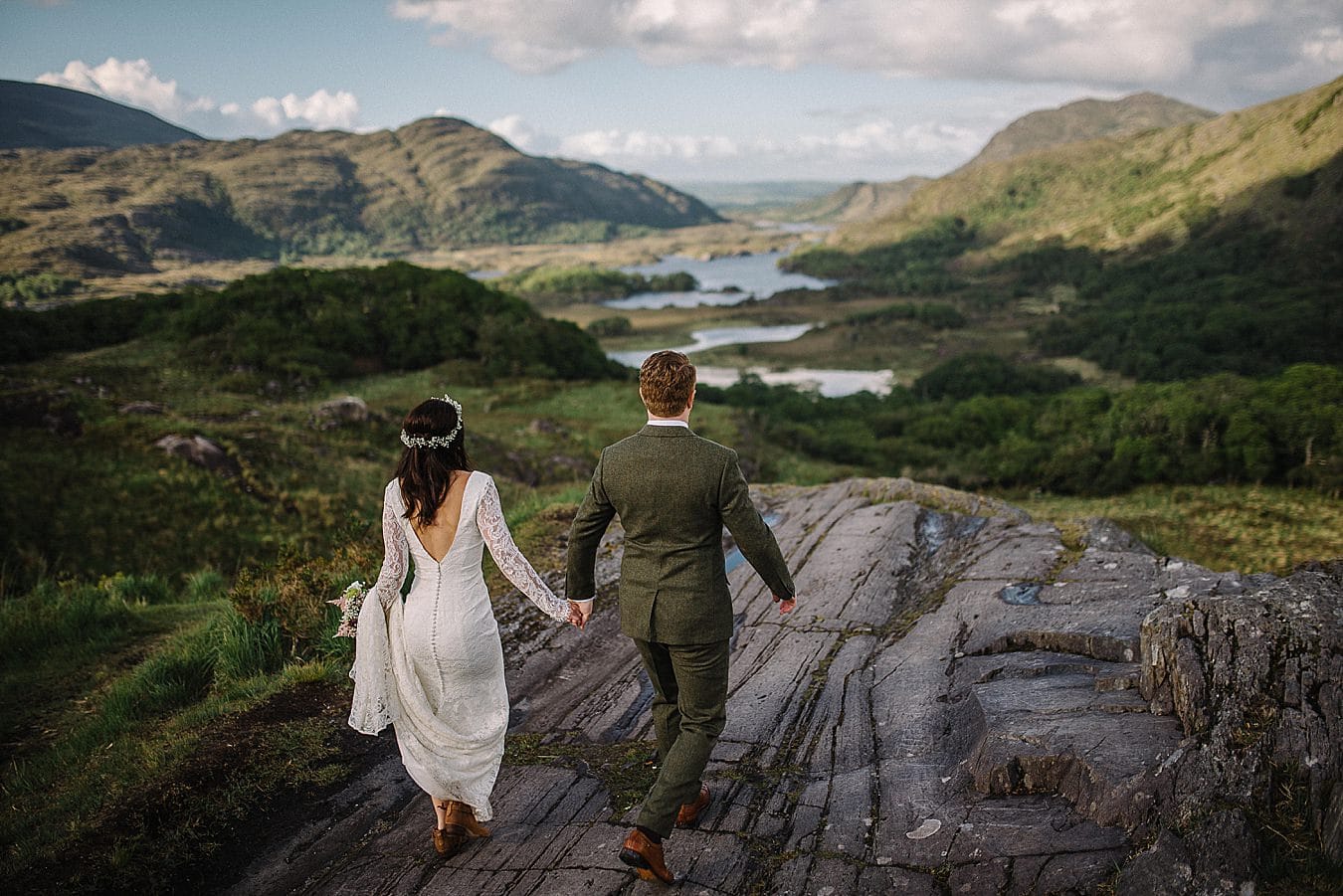
Mountains, lakes & waterfalls under the ever-changing Irish skies make a beautiful place for an adventure elopement. Killarney National Park is 26,000 acres of scenery that typifies the beauty of the Emerald Isle, you could say your vows in the ancient ruins of Muckross Abbey or next to a lake at the foot of a mountain. This place has everything a couple thinking of eloping in Ireland could want. To check out my complete guide to Killarney National Park elopements click HERE.
8. Dunseverick Castle, Co Antrim
Dunseverick Castle is another hidden gem on the Causeway Coast in Northern Ireland. It is a special place that has tranquility & peacefulness to it. This amazing place to exchange vows has an ancient ruin of a castle, lush green fields & huge looming cliffs. Dunseverick is the perfect spot for a small wedding ceremony as you are surrounded by cliffs that give shelter from the wind. This is the sort of place that you dream about when you’re considering eloping in Ireland.
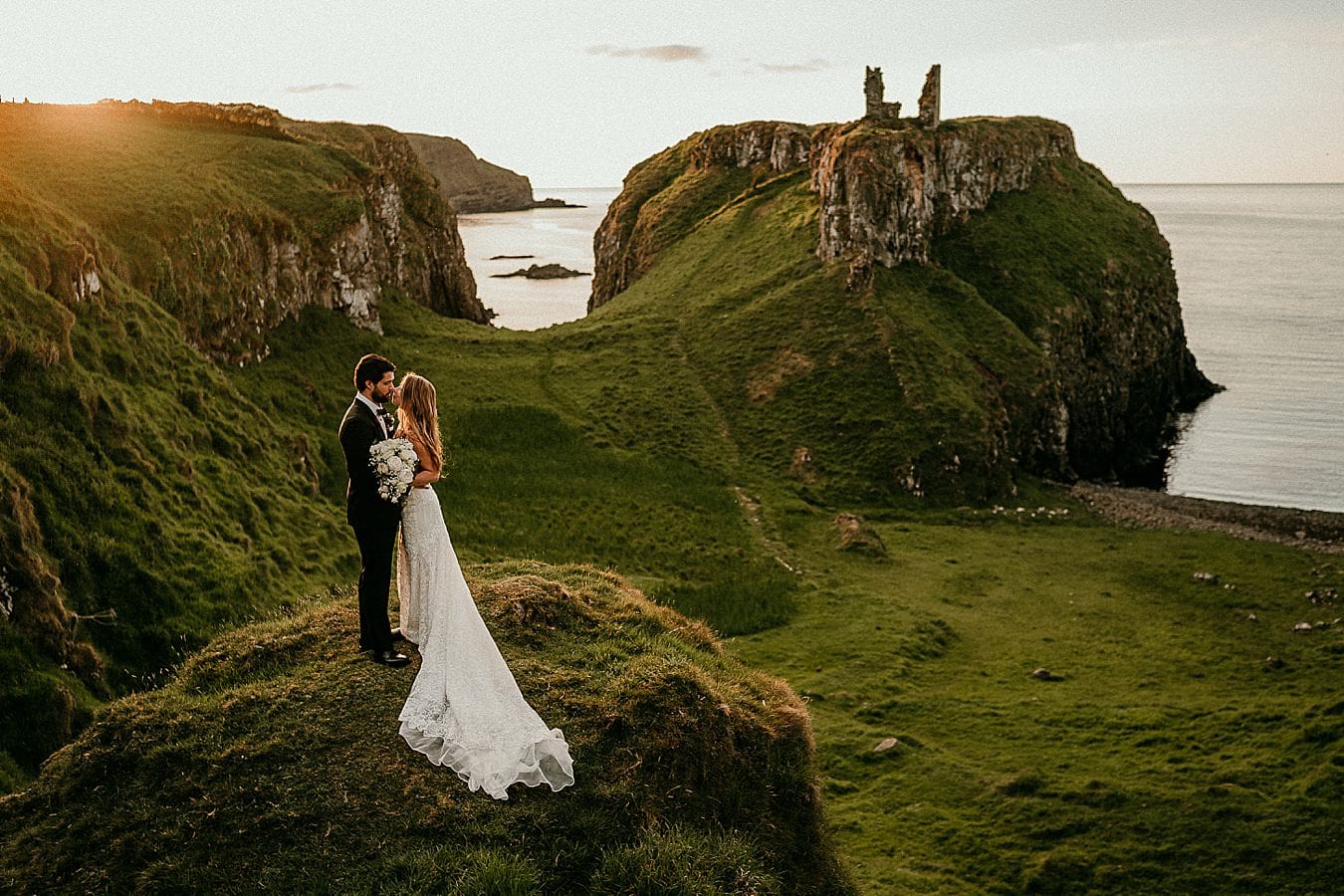
A huge plus for this elopement location is that it is so easy to access and is ideal if you’re bringing a handful of guests to see you get married. Click HERE to see a gorgeous vow renewal that happened at Dunseverick Castle.
9. The Dingle Peninsula, Co Kerry
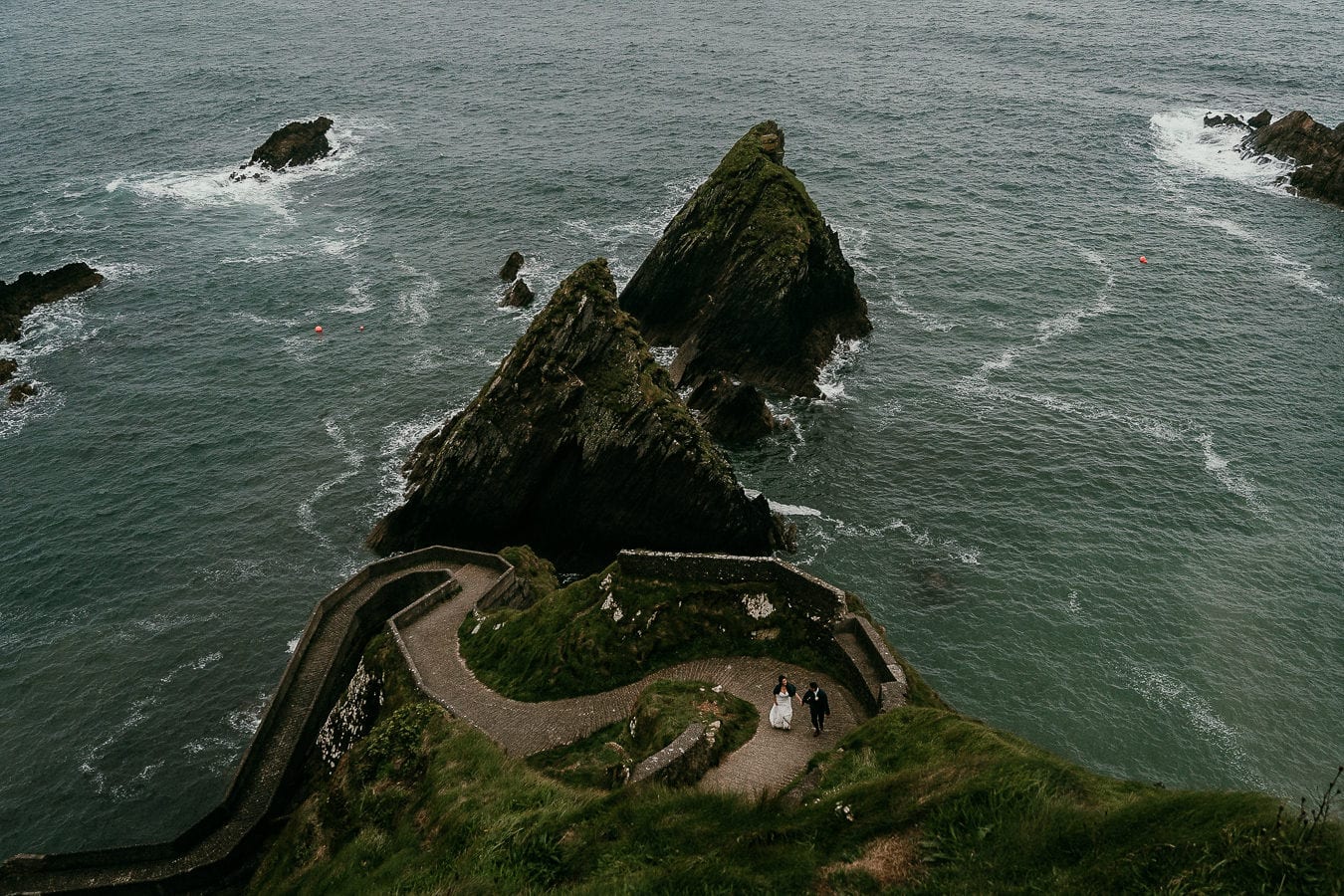
The Dingle Peninsula is one of the most popular tourist areas on the Wild Atlantic Way. From the stunning views of Slea Head to the crazy triangular rocks at Dunquin Pier or the beautiful ruin of Minard Castle, it’s a great place to explore. The town of Dingle itself is a lively place full of pubs, restaurants & live music. You can see why Dingle elopements are getting more and more popular.
If you choose another location to elope in Ireland, you should definitely hit Dingle up when you road trip around afterward. To check out an elopement that happened on the Dingle Peninsula, click HERE.
10. The Mourne Mountains, Co Down
Another awesome place where you could get married in Ireland is the Mourne Mountains. This mountain range is one of Northern Ireland’s most beautiful natural attractions. The Mournes are a granite range located in the South-East of Northern Ireland. There are countless places among these stunning mountains where you could have your elopement ceremony. For couples eloping in Ireland who love the mountains, this place is a no-brainer. Getting married in the Irish mountains just sounds cool! You could hike for a couple of hours to say your vows at sunrise, or there are several spots where you can park up a walk in less than 5 minutes and have a view that will blow your mind!

One benefit of having your ceremony here is that you’re only 2 hours from the Causeway Coast so you could potentially head there for a day after session if you want to hit some of the other spots in this list, such as Dunluce Castle or Dunseverick Castle. Click HERE to see an adventure session in the Mourne Mountains.
11. Ballintoy Harbour, Co Antrim, Northern Ireland
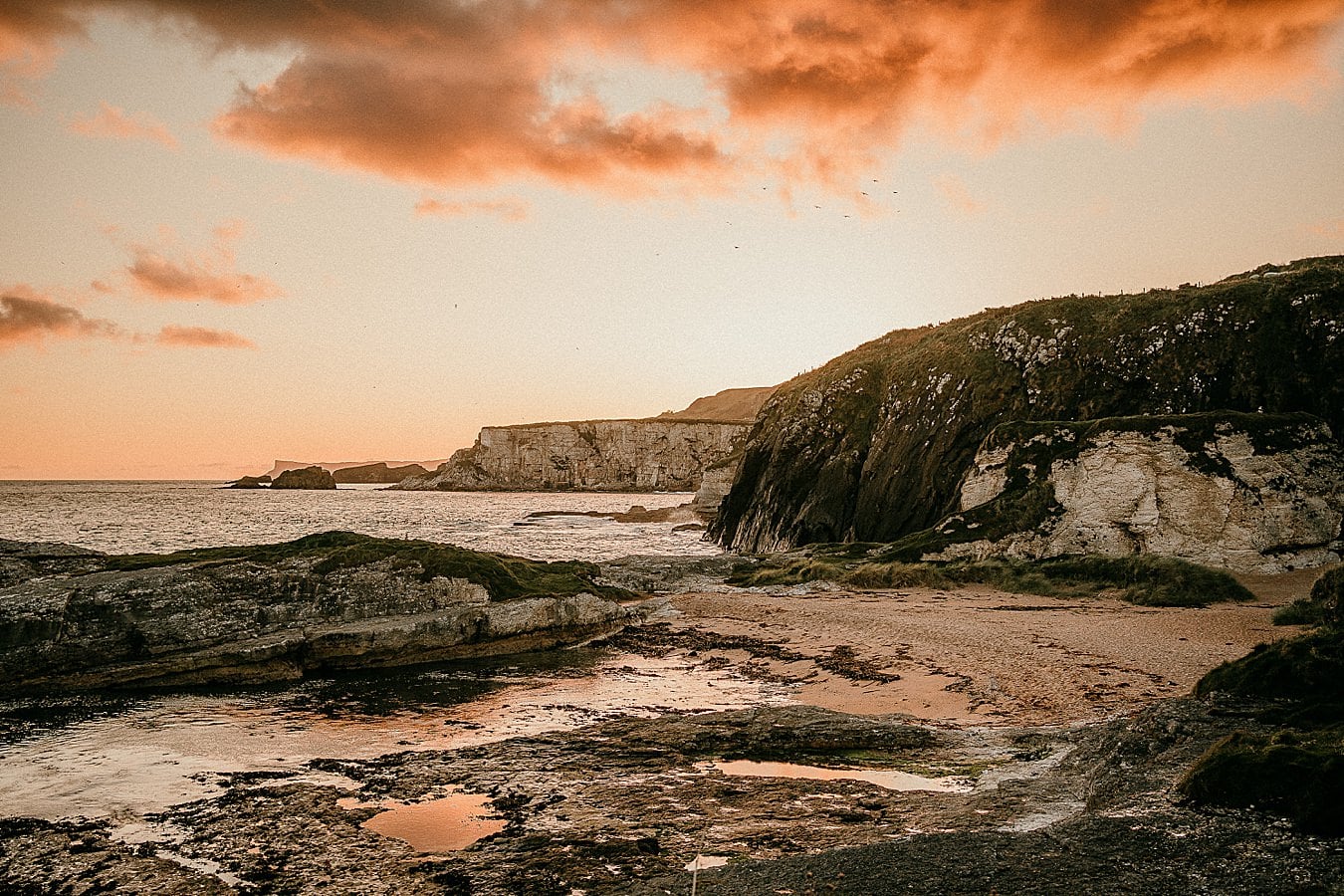
Ballintoy Harbour is a small fishing village located on the Northern coast of Northern Ireland, and it is a must-see destination for any Game of Thrones fan. This picturesque harbor was used as the filming location for the Iron Islands in the hit HBO series, and it is easy to see why. The rugged cliffs and crashing waves provide a dramatic backdrop for the on-screen battles between the Greyjoys. Visitors can take a stroll along the harbor and imagine themselves as one of the Ironborn or even catch a glimpse of the famous Iron Throne itself. With its stunning scenery and rich history, Ballintoy Harbour is a destination not to be missed for any Game of Thrones enthusiast.. There are so many photo options here you could easily explore for at least 2 hours. Crazy rock formations, black cliffs, white cliffs, this is a place you need to see for yourself!
One of the best things about Ballintoy Harbour is that it’s just a few minutes away from Dunluce Castle, Dunseverick Castle, The Giants Causeway & Kinbane. You’ll be able to hit this amazing place and a few others if you elope on the Causeway Coast.
12. Howth Cliffs, Co Dublin, Ireland
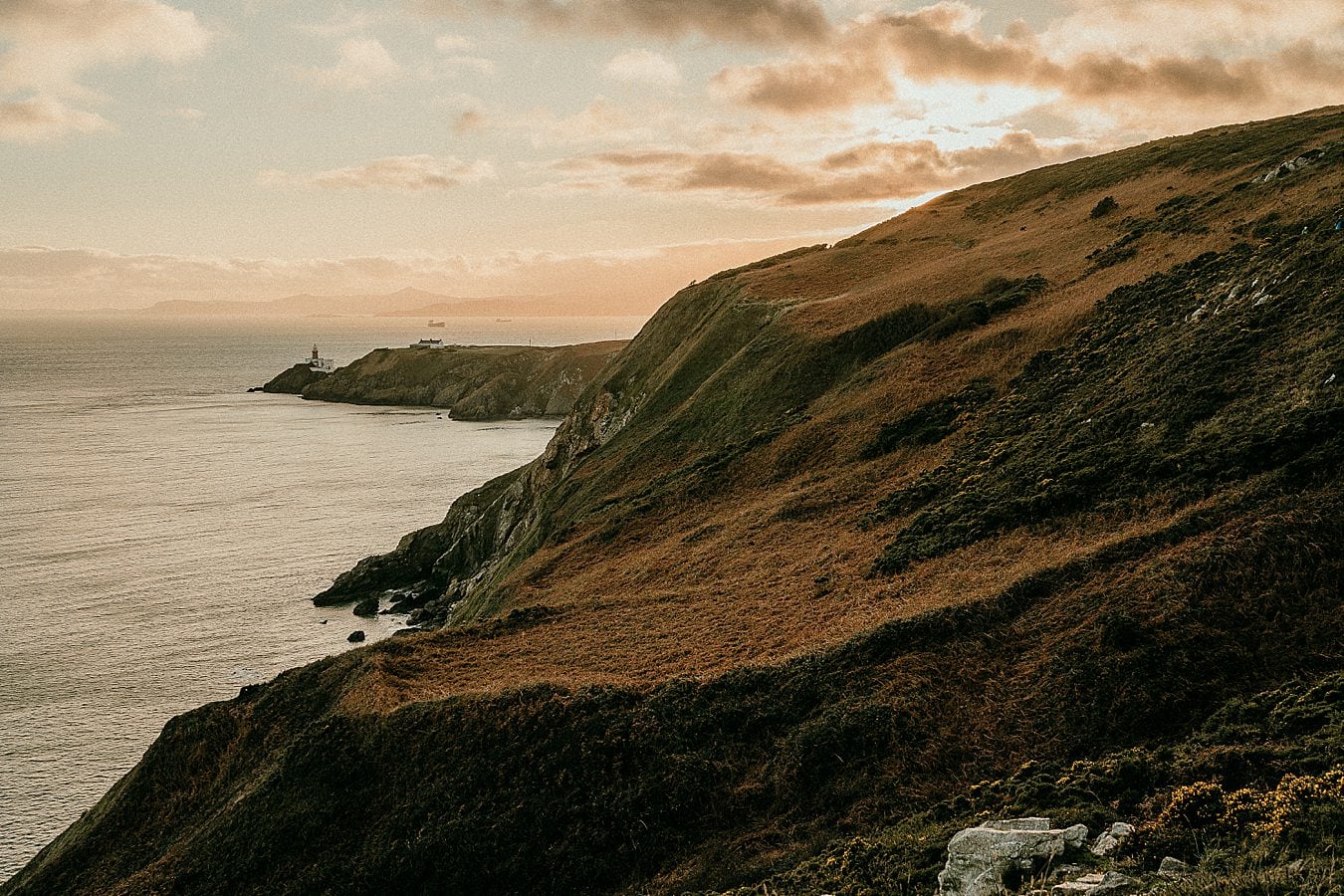
The Howth Cliffs offer a gorgeous hike with views of Baily Lighthouse, Ireland’s Eye, Lambay Island, Dublin Bay, and the distant Wicklow Mountains. Located just 30 minutes from Dublin Airport & 45 minutes from Dublin City Centre, this is one of the most convenient locations for an Ireland elopement.
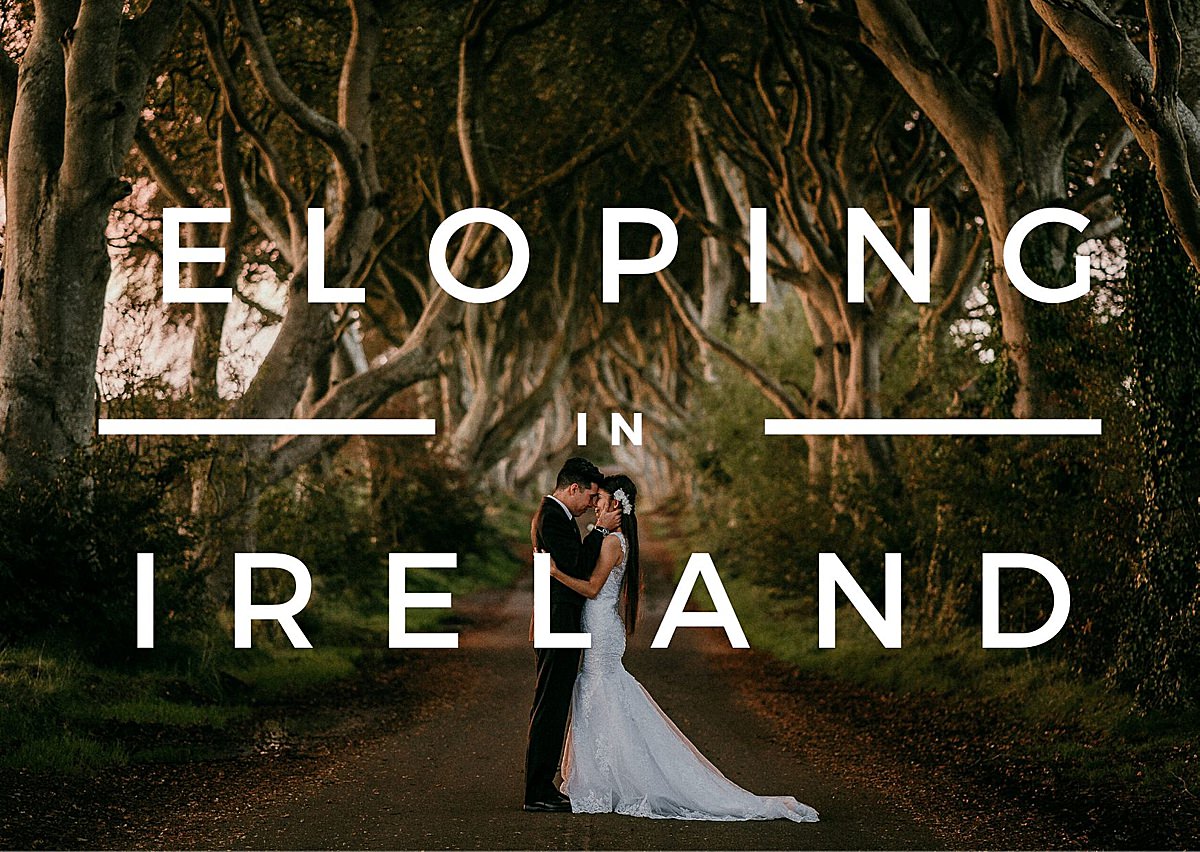
13. The Dark Hedges, Co Antrim, Northern Ireland
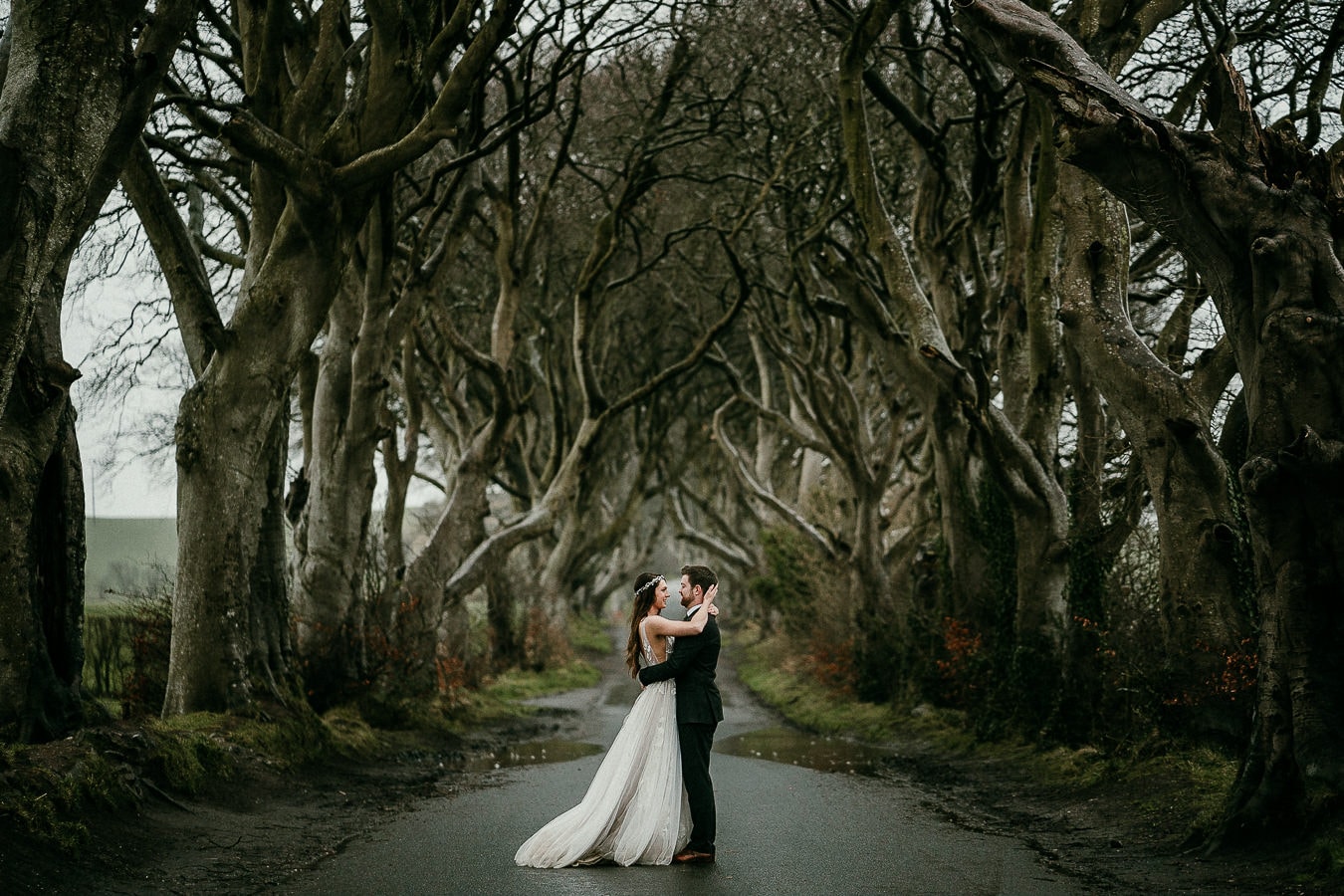
One of the most iconic & stunning places in the world. This road was made famous when it featured in Game of Thrones as the King’s Road. The Stuart family planted this picturesque avenue of beech trees in the 18th Century. Located in the heart of the Causeway Coast in Northern Ireland, you will be able to explore other amazing locations like the Giants Causeway or Dunluce if you choose to elope here.
Imagine a photo like this printed big on your living room wall!
14. The Slieve League Cliffs, Co Donegal, Ireland
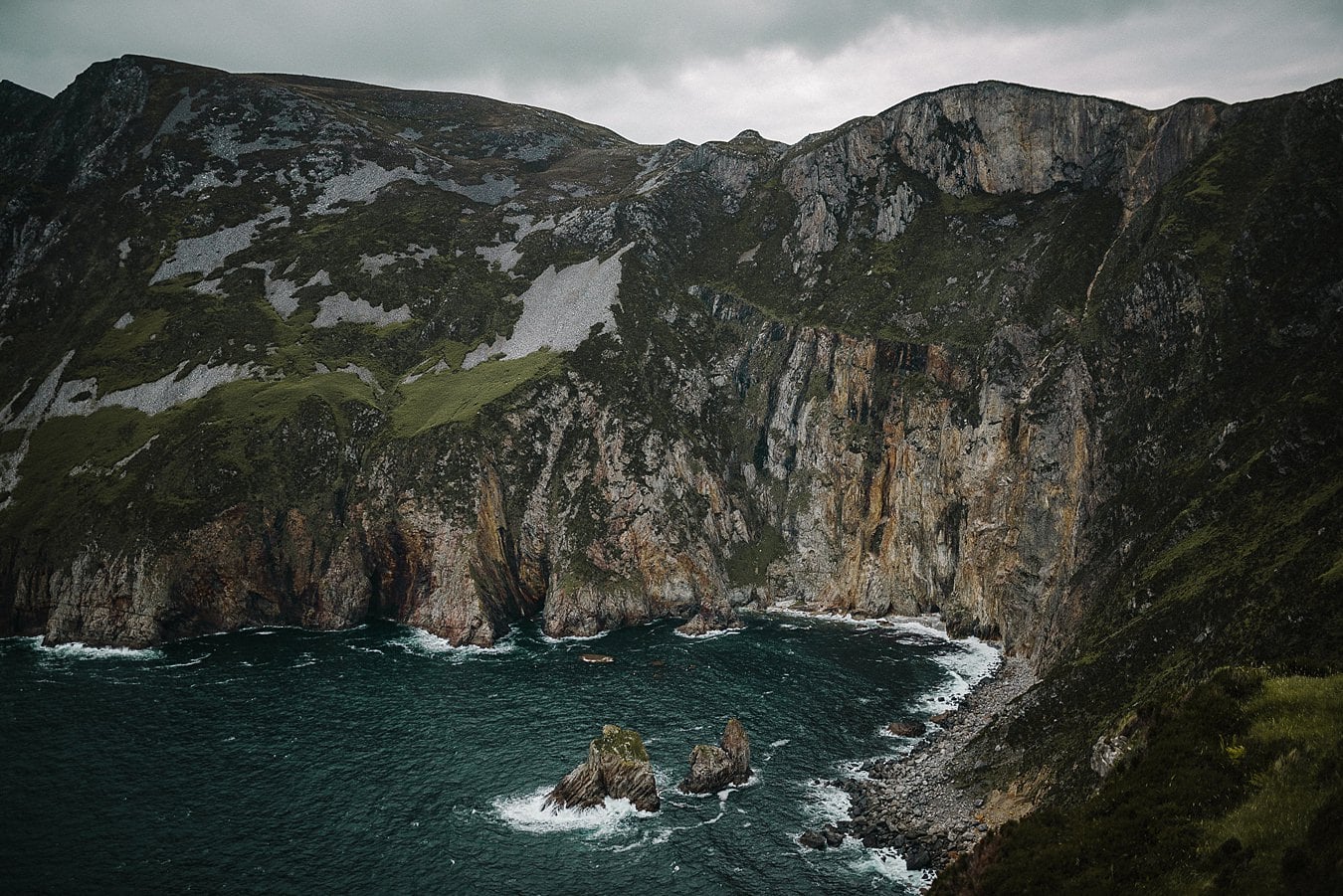
The Slieve League cliffs in Donegal, Ireland, are a must-see for any nature lover visiting the Emerald Isle. These towering cliffs, which reach up to 601 meters (1,972 feet) at their highest point, offer breathtaking views of the Atlantic Ocean and the surrounding countryside. This is the perfect place if you really want to experience the wilder side of Ireland. It’s just you and the elements. Hundreds of feet below, you will see the rocks being buffeted by the crashing waves of the Atlantic.
Visitors can take a guided tour of the cliffs or hike the One Man’s Path, a challenging but rewarding trail that takes hikers to the top of the cliffs. Along the way, you’ll be treated to breathtaking views of the ocean and the rugged Irish landscape. Keep an eye out for the local wildlife, including sheep and seabirds, which call the cliffs home. The Slieve League cliffs are also a popular spot for sea-cliff climbing and paragliding. The cliffs are located in the heart of the Donegal Gaeltacht, and many visitors take the opportunity to learn a little bit of the Irish language whilst there.
15. Corcomroe Abbey, Co Clare, Ireland
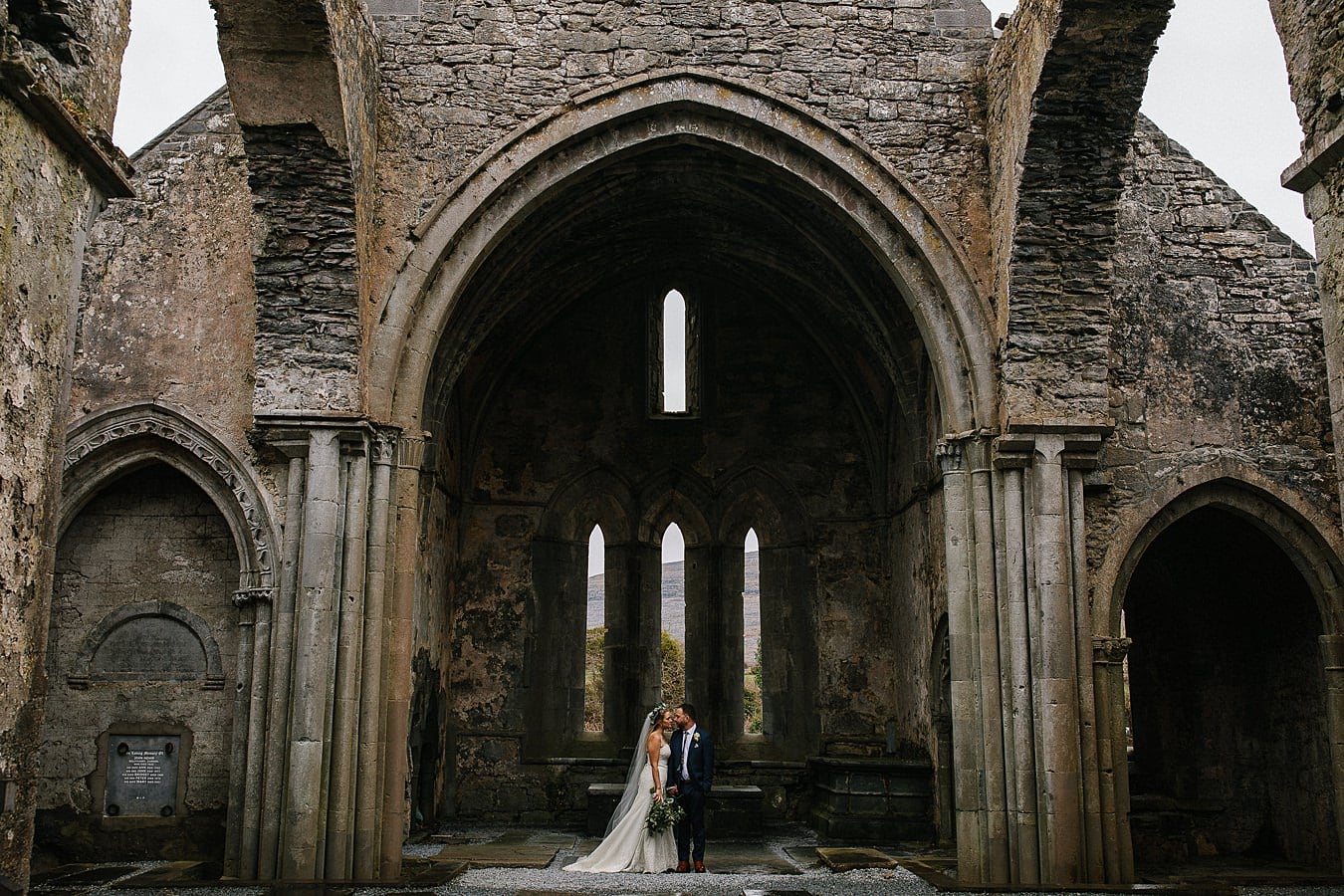
Could you imagine saying your vows in a beautiful ancient Irish Abbey? Corcomroe Abbey is a stunning place to say your vow and offers a little shelter from the elements if you want a ceremony that won’t be affected by the Irish weather.
The Cliffs of Moher are just 45 minutes away, so you have the option to head there for extra portraits. Galway is 55 minutes away, too, so you have great options nearby.
16. Mussenden Temple & Downhill Demesne, Co Antrim, Northern Ireland
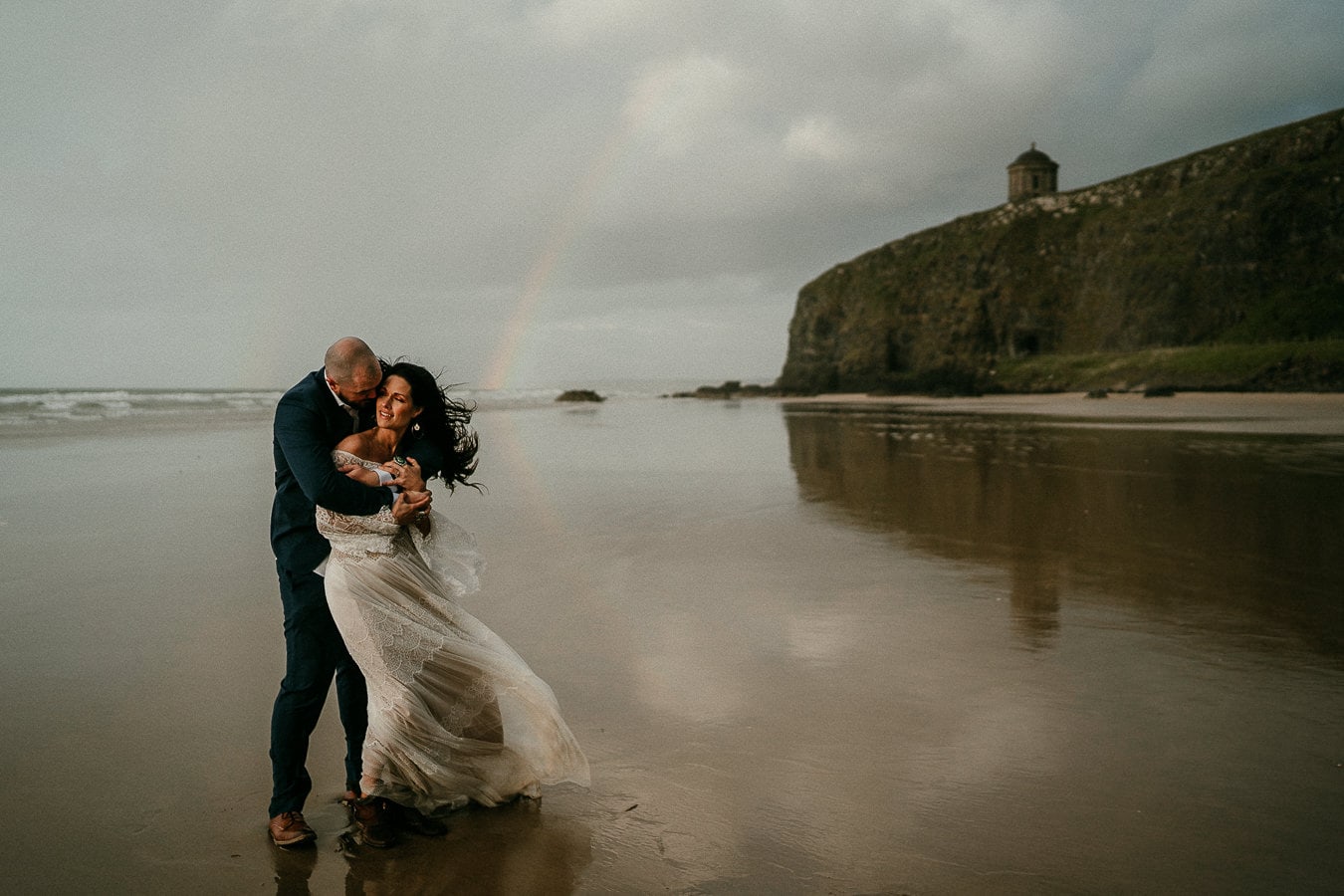
Mussenden Temple and Downhill Beach, located in Northern Ireland, are two must-see destinations for any Game of Thrones fan. The temple, built in the 18th century, sits atop a cliff overlooking the beach and serves as the location for the Dragonstone Castle in the show. The temple’s grandeur and the stunning view from the top are sure to take your breath away. Downhill Beach, on the other hand, is where Melisandre, the Red Priestess, burns the statues of the old gods in the show. The beach’s natural beauty and the unique rock formations make it a perfect spot for a relaxing stroll or a picnic. Both Mussenden Temple and Downhill Beach are easily accessible by car or by bus and are a great addition to any Game of Thrones-themed tour in Northern Ireland.
An ancient temple on a rugged clifftop, Mussenden Temple is a great place for your elopement. If you want to, you could even rent out the temple and have your ceremony there if you want a guaranteed shelter for your ceremony. It’s on the Causeway Coast, too, so it means you could also explore places like the Dark Hedges or Dunluce Castle.
17. The Wicklow Mountains, Co Wicklow, Ireland
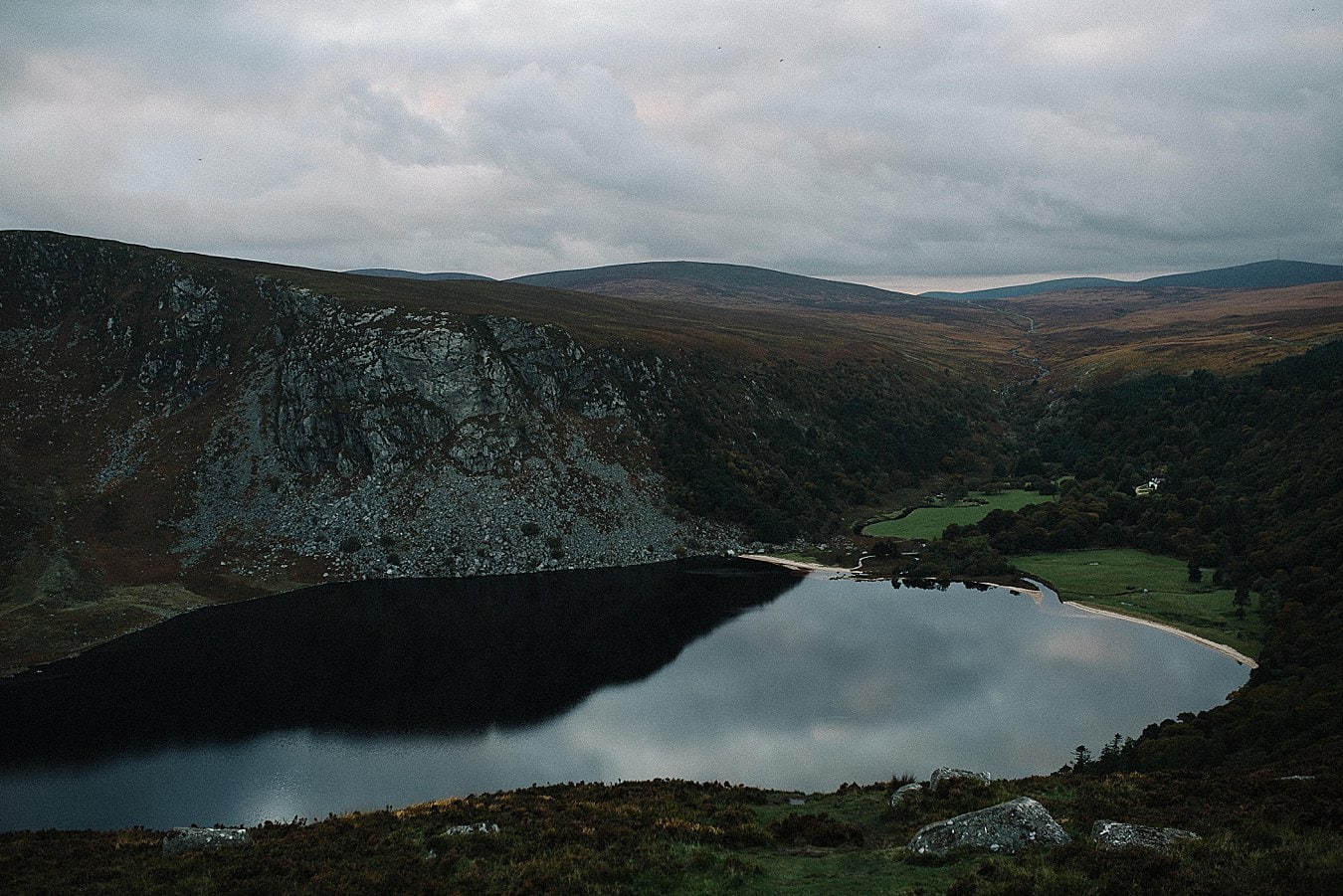
The Wicklow Mountains offer some of the most breathtaking landscapes in Ireland and are a must-see for any nature-loving couple wanting to elope in Ireland. One of the highlights of the area is Lough Tay, also known as “Guinness Lake,” due to its distinctive shape resembling a pint of the famous Irish stout. The crystal clear waters of the lake, surrounded by lush green hills, make for a perfect backdrop for any photo. Another must-see destination in the Wicklow Mountains is Glendalough, a monastic settlement dating back to the 6th century. The picturesque ruins of the monastery, nestled in a valley surrounded by rugged mountains, provide endless opportunities for beautiful shots.
18. The Giants Causeway, Co Antrim, Northern Ireland
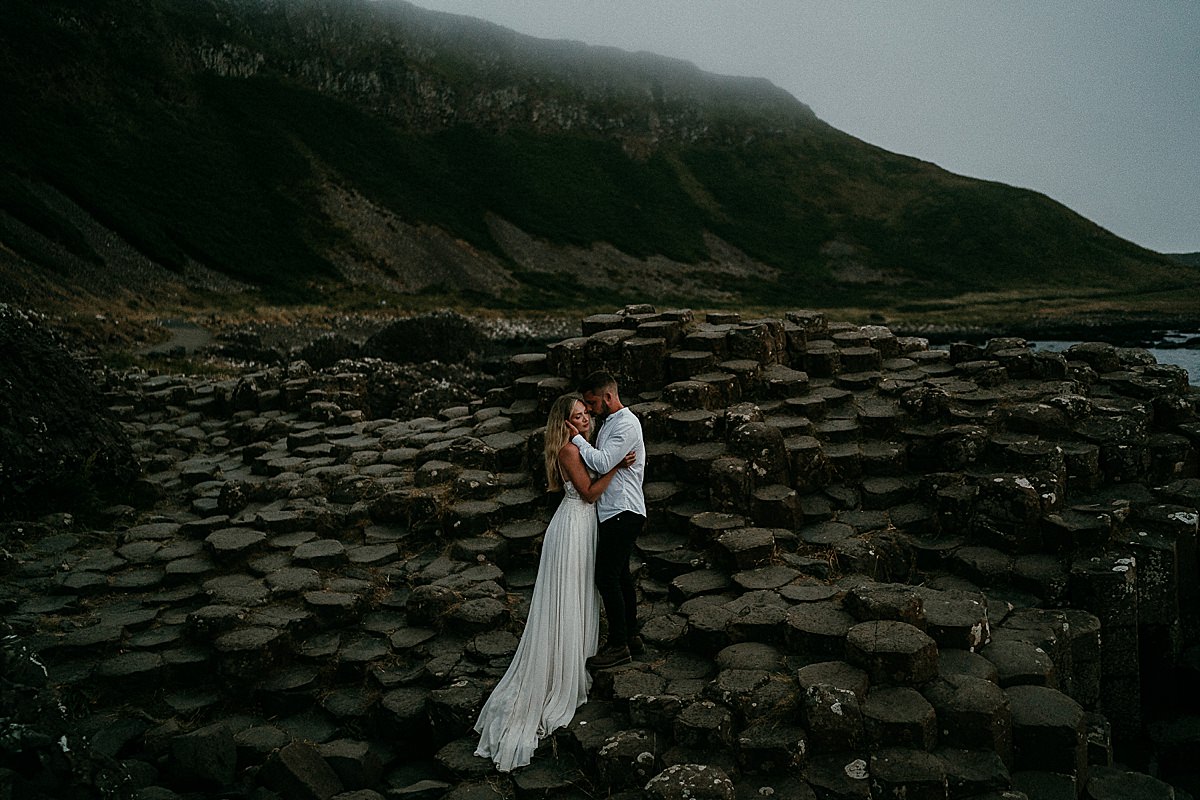
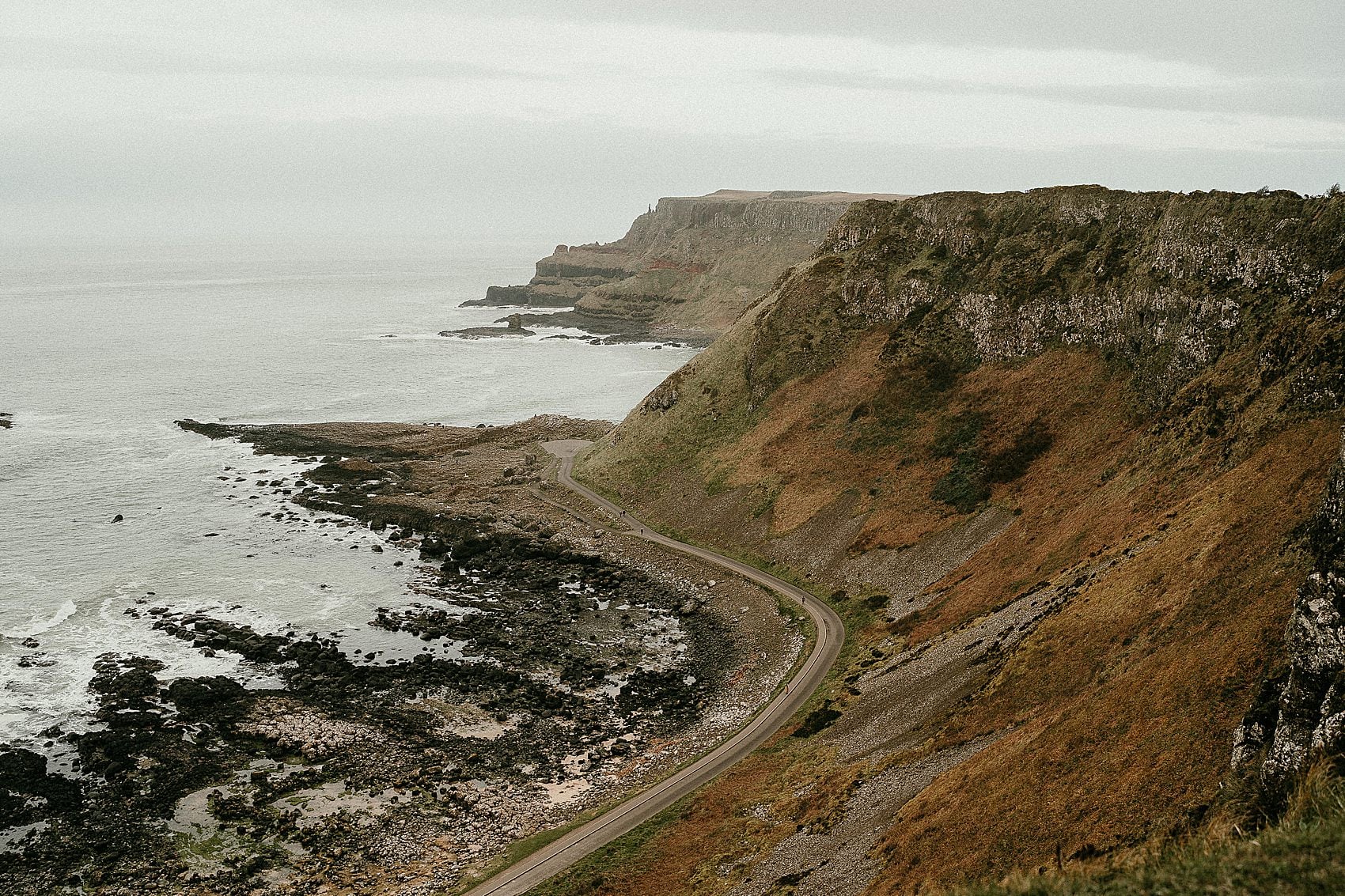
The Giants Causeway is a natural wonder located on the northeastern coast of Northern Ireland. It is a UNESCO World Heritage site and is considered one of the most popular tourist attractions in the country. The Causeway is made up of over 40,000 basalt columns that were formed by ancient volcanic activity. These columns are hexagonal in shape and vary in size, with some reaching up to 12 meters in height. The unique formation of the columns is a sight to behold and is truly a natural masterpiece.
Visitors to the Giants Causeway can take a guided tour to learn about the history and geology of the site. They can also walk along the Causeway Coast Way, a popular coastal walk that offers stunning views of the Causeway and the surrounding area. For those looking for a more adventurous experience, there are also boat tours that take visitors out to sea to see the Causeway from a different perspective. The Giants Causeway is a must-see destination for anyone visiting Northern Ireland and is sure to leave a lasting impression on all who visit.
It’s an amazing place; it’s probably best to head here at sunrise or after 6 pm when the crowds have left.
19. The Connor Pass, Co Kerry, Ireland
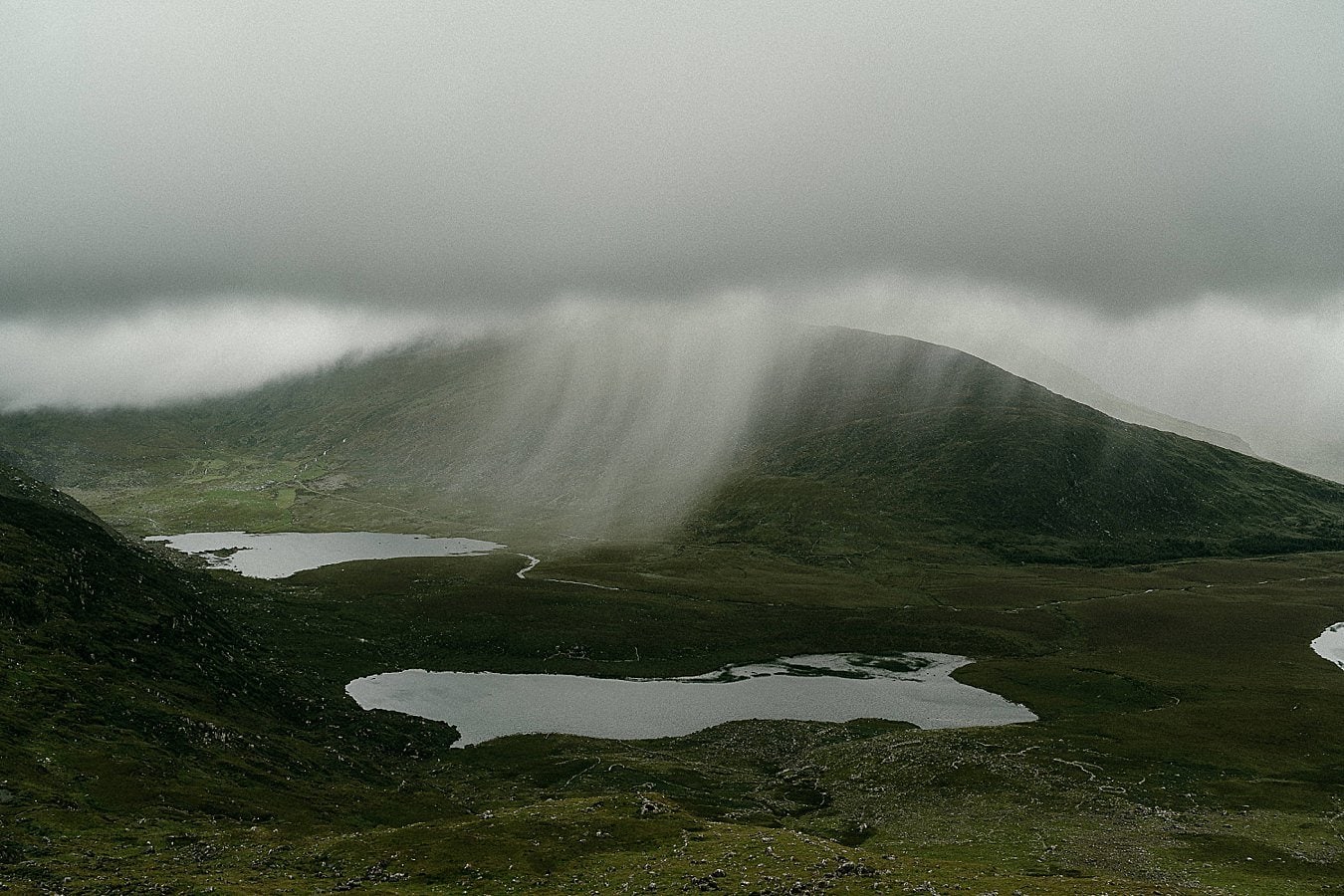
The Connor Pass is a must-see destination for any traveler visiting Ireland’s Dingle Peninsula. Located in County Kerry, this winding mountain pass offers breathtaking views of the surrounding landscape and the Atlantic Ocean. The pass is known for its steep inclines and hairpin turns, making it a thrilling drive for those who dare to take it on.
The journey to the top of the Connor Pass is a slow and winding one, but the views along the way are well worth the effort. The road is bordered by lush green fields and rugged cliffs, with the occasional sheep or cow grazing alongside the road. Once at the summit, visitors can take in panoramic views of the Atlantic Ocean, the Dingle Peninsula, and the neighboring county of Cork. The area is also home to a number of hiking trails, making it a great spot for outdoor enthusiasts looking to explore the area on foot. Whether you’re a seasoned traveler or a first-time visitor, the Connor Pass is a must-see destination for anyone visiting Ireland.
There are amazing places to explore, and it makes a great backdrop for a ceremony or portraits.
20. Whitepark Bay, Co Antrim, Northern Ireland
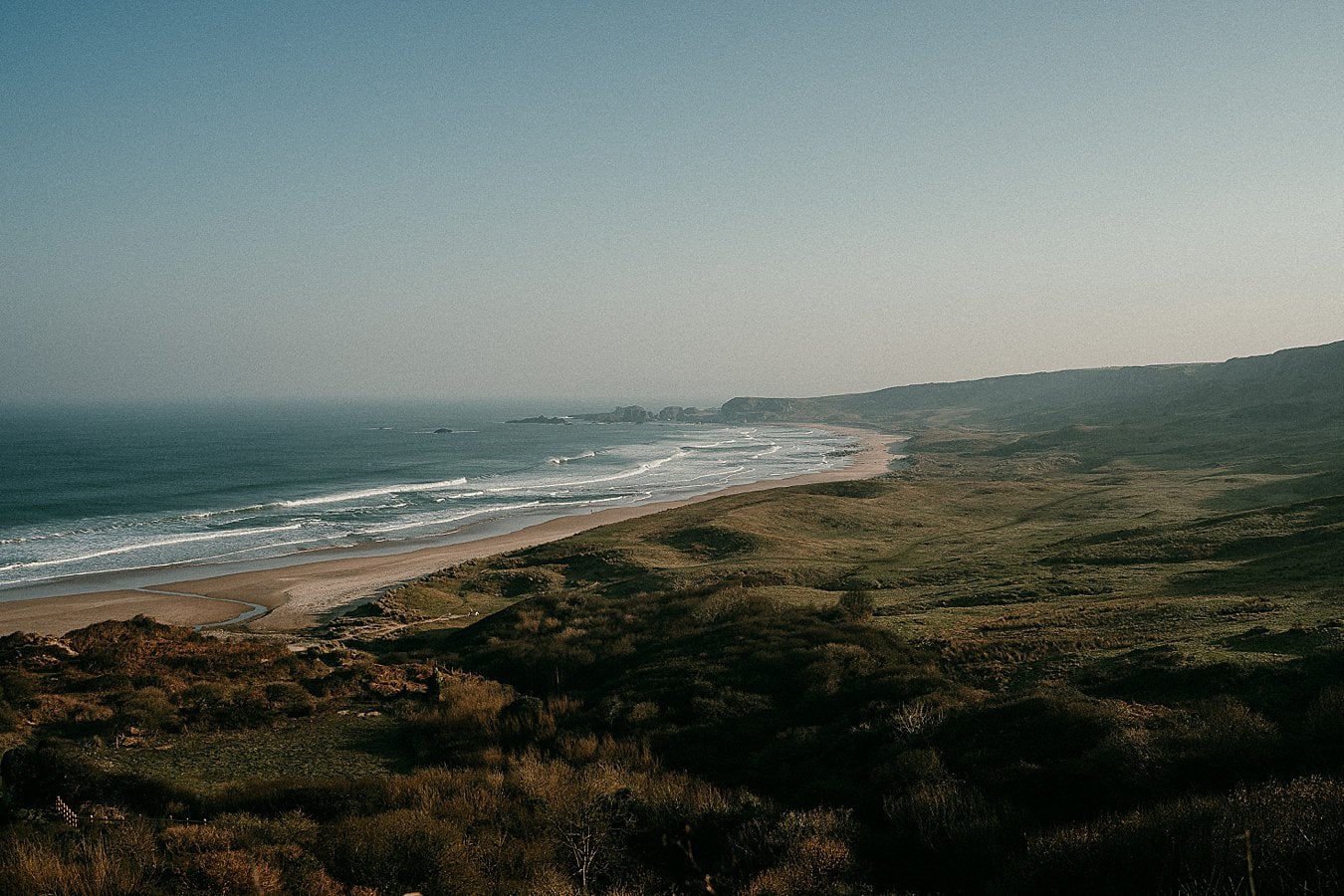
It is one of the most stunning beaches in the whole of Ireland. The beach is part of a farm, so a herd of cows could join you during your elopement. You can explore the beach and the surrounding fields, or you can have your ceremony from a couple of viewpoints to get the backdrop. Again, this spot is on the Causeway Coast, so you get the benefit of being close to Dunluce Castle & the other amazing locations in the area.
White Park Bay is a truly breathtaking destination that should not be missed by any traveler visiting Northern Ireland. Located on the Antrim Coast, this picturesque bay offers visitors a chance to experience the rugged beauty of the Irish coast in all its glory. The white sandy beach and crystal clear waters are a true paradise for those looking to relax and soak up the sun, while the rugged cliffs and cliffs offer a dramatic backdrop that will take your breath away. Whether you’re looking to go for a hike, take a dip in the sea, or simply enjoy the stunning views, White Park Bay has something for everyone. So pack your bags and head to this hidden gem in Northern Ireland for an unforgettable experience.
The Best Places to Elope in Ireland & Northern Ireland in 2023!
So those are the best places for couples eloping in Ireland. Could you imagine getting married in Ireland and saying your vows in one of these stunning places? If you can, working with adventurous couples and shooting elopements in amazing places is my absolute favorite, if you’re eloping in Northern Ireland or anywhere else exciting, it would be great to hear from you! I love to help couples have an amazing experience & get epic photographs that document their love story! You can get in touch HERE.
To keep up with my latest adventures, make sure to follow me on Instagram. Click HERE to check out my feed.
Common Questions about Eloping in Ireland
I’ve helped so many couples plan their dream elopement experiences here in Ireland and these questions come up a lot. Hopefully, you’ll find the answers helpful.
Can we get legally married when we elope in Ireland or Northern Ireland?
The simple answer is yes, you can get legally married when you elope in Ireland or Northern Ireland. There are a couple of differences between the two countries, though.
You can get legally married absolutely anywhere in Northern Ireland; the celebrant who marries you is the crucial factor. So you can stand on a cliff edge, on top of a mountain, in a field, wherever you want. To check out the legalities of eloping in Northern Ireland, click HERE to see the government website.
To be legally married in the Republic of Ireland, you must be near a landmark or building recognized by the state with a postal address. This obviously slightly limits your options. To see the legal requirements to elope in Ireland, click HERE.
Should we have a symbolic ceremony for our Ireland elopement?
I recommend that all my couples opt to get legally married in their local courthouse a day or so before flying to Ireland to elope.
Here are a few reasons why symbolic ceremonies are so much better for international elopements.
- It saves you a lot of hassle and form filling.
- You aren’t limited when choosing locations for your elopement ceremony.
- You get to make your ceremony 100% about you with zero legal obligations to do or say.
- You get to decide if you want a celebrant or not during your ceremony.
- You don’t have to worry about forgetting or losing the paperwork in the midst of all your travel logistics.

Do we need a celebrant & witnesses for our elopement in Ireland?
If you’re getting legally married, you will need an official celebrant and 2 witnesses. I’m happy to be a witness for you. If you opt to have a symbolic ceremony, you won’t need either, but lots of couples still like to have a celebrant to marry them, especially if they want a hand-fasting ceremony. If you’d like to know more about hand-fasting click HERE.
When is the best time of year to elope in Ireland?
The time of year to elope in Ireland is honestly the month that works best for the two of you. The climate in Ireland is mild and wet. This means it rains year-round (hence all that green), but it never rains that much. The temperature is cooler but also mild. The average temperature in the coldest winter month is 41.8℉, and the warmest summer month is 59.1℉. So it’s never that cold or never that hot.
I’ve shot a pile of winter elopements, and though they were cooler, they were amazing. You just need to be prepared for the cold. You can check out my top tips for staying warm during your winter elopement HERE.
One other factor to consider is the length of days, in the winter it goes dark around 3/4 pm, in the summer it can be bright until 11 pm. The reason this is important is that ideally, you want to be shooting the sunset to get the best elopement photos. You can find out more about how to get the best elopement photographs ever HERE. If you’re bringing guests then you maybe want to spend the evening with them so a spring or autumn elopement in Ireland might be best for you.
Which is the best airport to fly into if we want to elope in Northern Ireland?
Most couples fly into Dublin International Airport for their Ireland elopement and then get a rental car, the drive takes around 2 hours and 35 minutes to get to the Causeway Coast in Co Antrim.
Some couples fly into London Heathrow and then get a connection to Belfast City airport but unless you plan to spend a couple of days in London the easiest way is probably Dublin.
Can we bring guests to our elopement in Ireland?
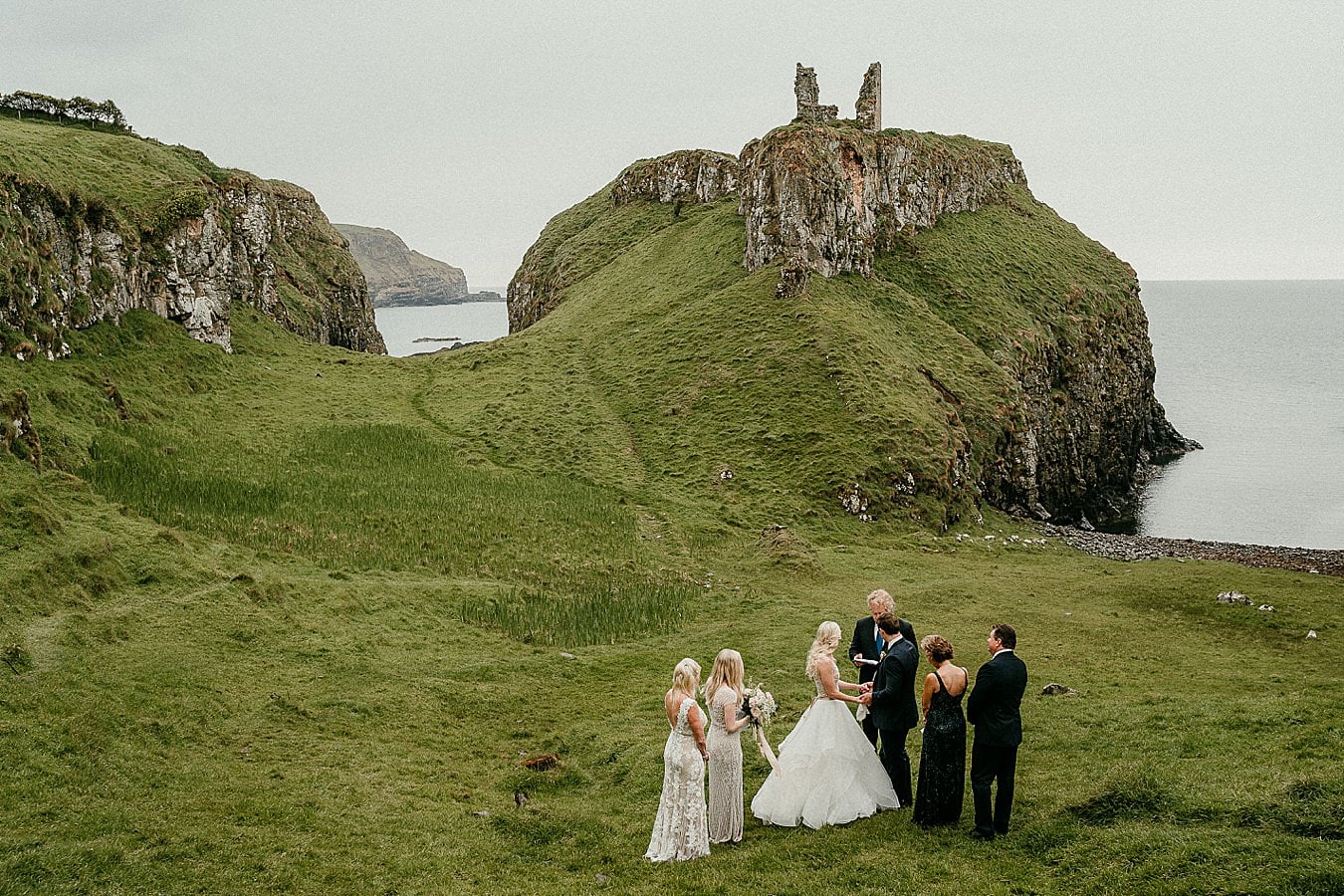
One of the best things about creating your perfect elopement day is that you can do whatever you like! You can bring guests if you want, you can elope with just the two of you. There are no rules. The most important thing is that you have the most amazing experience that is meaningful to the two of you. If that means your parents or best friends come along too then go for it.
One way to include friends and family in your elopement if they aren’t there with you is via Facetime, they could even be involved in your ceremony that way. They could do a reading or pray for you. Some couples read letters from loved ones or play pre-recorded videos.
Where should we stay during our Irish elopement?
This really depends on where you choose to elope but I generally recommend a nice bright Air Bnb cottage close to where you’ve chosen to have your ceremony. You could do a hotel or Bed and Breakfast but they usually aren’t as nice for photos and have other people wandering around.
Once you’ve booked in with me I’ll have recommendations for you that will help us create a timeline that maximizes your time in amazing locations.
Is it difficult to plan an elopement in Ireland?
I specialize in helping my couples plan and create their dream elopement experiences in Ireland & Northern Ireland. So if you book me, it won’t be remotely difficult. In fact, you will be blown away by how easy and stress-free the whole experience is. I have a list of the ultimate elopement vendors that I will share with you once you’re booked in, so you’re covered for every possible thing you might need, from celebrants to videographers. I’m here to help you have the most incredible time & get some awesome photos in the process!
What things are there to do in Ireland for our honeymoon?
There are so many great places to visit, things to do, and places to eat in Ireland & Northern Ireland! After your elopement, there will be so many things you want to go and check out. You are going to LOVE it here! You could explore the national parks, hit the cities, and soak in the culture in Dublin, Belfast, and Galway. You could test your nerve on the Carrick-a-rede rope bridge. You could road trip on the Wild Atlantic Way. You could stay in a 5-star Irish Castle. You could do a Game of Thrones tour. You could visit the Guinness factory. You could immerse yourself in the history of this ancient land and find out about your ancestry. There really is so so much to do. Check this link for more ideas. Lots of couples do a week or two in Ireland followed by a week in Paris or the Amalfi Coast; once you’re in Ireland the rest of Europe is so easily accessible. Click HERE to find out 31 awesome things for couples to do on their honeymoon in Northern Ireland.
How much does it cost to elope in Ireland? Ireland Elopement Packages
All-inclusive elopement packages for couples eloping in Ireland & Northern Ireland cover everything you could want & need to create your dream elopement experience starting at $10,800. For super busy couples who don’t want to spend all their weekends planning, I offer planning assistance. With my planning assistance, you get everything needed, photography, celebrant, flowers, hair & make-up. It’s pretty much an all-inclusive Ireland elopement package. If you don’t need that you can just book me for your elopement photography, either way, I’m here to help you craft your perfect Ireland elopement day! To find out more about my elopement packages please click HERE.
Elope to Ireland – Planning Resources
I’ve helped so many couples elope in Ireland & have had the most incredible elopement experiences. There are a lot of things you can do to ensure that you have the best day ever. I’ve made some elopement planning blog posts that should be super helpful for any couples in the process of planning their adventure elopement. So please stick around, have a read, and if you have any questions, you’re more than welcome to reach me via my contact page. I’m here to help! Eloping in Ireland is such a great choice; I’m so stoked for you!
Some great websites to help plan your trip to Ireland & Northern Ireland
Love this list, such great information for anyone wanting to elope in Ireland!
thanks Sydney, yeah Ireland is the raddest place to elope!!!
OMG these pictures and locations are to die for!
It’s on my list now!
Glad you like them, Ireland is an incredible place for an elopement!
These are some incredible epic Elopement places!!!! Ireland is just one of my faves to adventure for sure!
This makes me want to jet off to Ireland immediately!
Do it Jess!
Dying to get over to Ireland! What a stunning setting for a wedding. You capture it wonderfully!
Thanks Jeff!
These are all so gorgeous; you have me missing home like mad!!
Thank you Rachel!
Seriously this is making me want to run away to ireland
Do it!!!!!
We’re actually eloping in Ireland ourselves and this list is super helpful to plan our trip! Thanks for the inspiration 🙂
Amazing that you’re eloping here!!! Enjoy!
Oh my, these images are gorgeous and make me so homesick. This is an incredibly helpful post for places to elope in Ireland!
thank you Kate!
OH MY GOSH these are freaking MAGICAL!!! Holy cow, I’ve been wanting to visit Ireland for so long and this has my wanderlust raging, haha. These are honestly stunning images and this is a great resource for couples looking to elope in Ireland.
Thank you Aimee!!! You need to see Ireland for yourself!!!
Omg your photos of Ireland are breathtaking! It looks like an amazing place to elope!
Thank you Naomi, yeah Ireland is the best place to elope!!!!
Yep, you’ve convinced me. That first shot alone sold me! I’d love a view renewal in Ireland!
Awesome lets do it!!!
Gorgeous elopement photos! If I could turn back time this is absolutely what I would’ve done!
Aw thank you!
Would like to see a place in County Tyrone added to this list, it’s where my great-greaT-grandfather came from
These photographs and landscapes are really epic! I am not going to elope but I wish I could visit Ireland!